Wednesday, February 25, 2009

Ten Minute Version of The Beatles' "Revolution"

This is what it was like back in the time when The Beatles were putting out new albums, which was also back in the time before "rock music journalism," 500 TV channels and the oxymoronic horror that is "Entertainment News." We would make regular trips to the local record shops to find out what was new. Every time we flipped through the LP bins we'd come upon new albums by favorite bands that suddenly appeared from out of nowhere, like those big mushrooms that show up on the lawn after a summer rain.

Earlier today I took a look at my favorite Bob Dylan website, Expecting Rain, and there in the general news section I found a link to a news item in the "Lifestyle" section at the Gibson Guitar site (I didn't know Gibson guitars had a lifestyle either) that read:

During the past 24 hours, news of a previously unreleased version of the Beatles' "Revolution" had been circulating wildly on various websites. Now, regrettably, the powers-that-be at EMI Records appear to have demanded the track be removed from YouTube.

Those fortunate enough to hear the track in its entirely got a terrific glimpse into the experimental side of the Fab Four. The 11-minute track, which runs a full seven minutes longer than its official counterpart, is rife with sonic adventure. According to the book "The Beatles: Recording Sessions," by Mark Lewisohn, the newly surfaced version was recorded on May 30, May 31, and June 4, 1968. In its full glory, the song mutates midway through into sonic experimentation rife with tape loops and strange vocal effects.

Lewisohn writes that the Beatles ultimately decided to chop the song in half, thus creating the commercially oriented "Revolution 1" and the avant garde noisefest "Revolution 9," both of which appeared on the album The Beatles, commonly known as The White Album. While YouTube no longer hosts the unreleased track, given the degree of interest generated, it’s a safe bet the track will soon surface again.

That last sentence is particularly prophetic. There are fourteen items in today's ER News section; that was number three. By the time I got to number eleven, I found the mp3 of the "Revolution" track. It comes from the blog Twelve Major Chords where he writes:

A song over forty years old leaking in this day and age of the interwebs is almost a farce, given how common it is to witness entire records appearing online in crude mp3 matter months before being released. What is more odd is that someone who calls themselves a Beatles fanatic, such as myself, didn’t even know this take (it was take 20) existed! I’ve known about the infamously mythological Sgt. Pepper-era, LSD-infested unreleased sound collage “Carnival of Light” and the orgasm-inducing approx. seven hour long “Helter Skelter” slow-groove jam that Macca won’t release; but I’ve never heard of this “full version” of the White Album classic, “Revolution 1″.

What's it sound like? Well, if the instructions I found on how to add a music file to this blog work (I know... I have little hope too) you should see something here that you can click on to play it. If not, you can find it at the Twelve Major Chords blog and, barring that, it should pop up all over the web regardless of efforts to suppress it. It's 2009 and it isn't China.

It is the slow version of the song; it is more acoustic than either of the two released versions. It is more clearly a John and Yoko collaboration, and represents an early effort on Lennon's part to infuse a Beatles recording with experimental audio elements. David Quantick's excellent book, Revolution: The Making of The Beatles' White Album, does a superb job of defending "Revolution #9" for having introduced millions of pop fans who would never buy a John Cage recording to the possibilities of the avant garde.

You can hear the process by which Lennon eventually decided to separate the elements into two separate treatments that would become "Revolution" and "Revolution #9" on The White Album.

Here in the opening movement of the 21st Century, it is nice to know you can still be surprised.

Enjoy.

Friday, February 20, 2009

The Greatest Song. Ever.


Paul Brady has an album of duets with the comparably talented Andy Irvine called Andy Irvine & Paul Brady originally released on the tiny Irish Mulligan label in 1976 (and later in the US on Green Linnet) and finally released on CD a few years back.

The album is brilliant, but there is one piece that Brady does all by himself that closes the record's first side (remember "records" and "sides"?) that I love to play for people who've never heard it. I think it's played in an Open G tuning (though that doesn't get me any closer to being able to play it myself). The guitar playing seems almost magical to me; his hands just bounce on the surface of the strings like dragonflies on the surface of a pond.

Brady's gorgeous tenor is perfectly suited to the task as well. If you've ever seen Matthew Barney's Cremaster Cycle films Brady plays the Maitre D' in Cremaster 3 in which he sings in Gaelic the entire time he's on screen (here's an excerpt):


But "Arthur McBride...."

I don't know exactly when it's set (when was England sending soldiers off to fight the French?) but the battle that takes place in it is just lovely. "And we lathered them there like a pair of wet sacks, and left them for dead in the morning." Gives me a chill every time I sing it. And the irony at the end, "We obligingly asked if they wanted recruits / For we were the lads who would give them hard clouts / And bade them look sharp in the morning." Man... you can't beat it with a shillelagh.

From the same record, "The Plains of Kildare" and old Irish song that, when moved to the mountains of Appalachia in the 19th Century, becomes "Old Stewball Was a Racehorse."


Here's a bonus; not on their album, Andy & Paul do "The Lakes of Pontchartrain."

Thursday, February 12, 2009

Why I love Carrie Fisher....
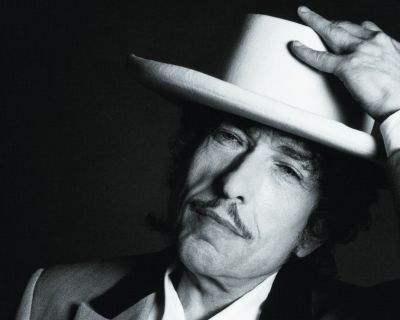


Nathan Rabin writes:

Carrie Fisher’s life is a perfect storm of funny. Not many folks are privileged enough to have Bob Dylan show up at one of their cocktail parties wearing a parka and sunglasses. Even fewer are capable of coming up with the perfect zinger for the occasion:

“Thank God you wore that, Bob, because sometimes late at night here the sun gets really, really bright, then it snows.”


From Fisher's wonderful new book, Wishful Drinking.

Monday, February 9, 2009

The Day the Earth Stood Still....


February 9, 1964. Forty-five years ago today The Beatles made their first appearance on The Ed Sullivan Show and... pick one.

(1) The "Sixties" officially started.

(2) The decline and fall of Western Civilization got underway.

(3) Two months and eighteen days after we buried a President it was OK to smile again.

The first wave of rock & roll had been repelled. By February 9, 1964 Elvis was in the Army, Chuck Berry was in prison, Jerry Lee Lewis was in exile, and Little Richard had gone to church. Put in their place were the teen idols: Bobby Rydell, Paul Anka, Fabian, Dion. In a government laboratory scientists were able to successfully remove every molecule of soul and humanity from the songs of Fats Domino and Little Richard and grow Pat Boone in a test tube.

But the first battle had been fought with conventional weapons. On February 9, 1964, The Ed Sullivan Theater was added, just below Hiroshima, Nagasaki and the Bikini Atoll, to the list of sites where nuclear weapons had been detonated.

Watch it today, and the energy is still there.