Friday morning, ten, ten fifteen, I took the dogs for a walk. Across the street from our house is an empty double; two apartments that have been empty for the past five or six years. Before that it was a problematic property, rented by a succession of young couples answering a casting call for
COPS. Drunks shouting in the street at three in the morning; young women crying, running down the sidewalk with a baby in tow; the inevitable arrival of the squad cars… that sort of thing.
Our bedroom faces the street and the soft blue, red, and yellow pulse of police lights on the wall in the middle of the night does interesting things to your dreams.
Now whoever owns the place has had workers for the past month or so, gutting the inside and remodeling. The main guy is an ex-con, covered with jailhouse tattoos. He likes the dogs and we stop and chat whenever we go by and he’s there. I think one of the problems with prison must be leaving it behind once you don’t live there anymore. Almost every conversation leads to another story about something he doesn’t do anymore that put him in prison before. One morning he was all bruised up and told me he’d been jumped by five Mexicans in the parking lot of an East Side bar a few nights earlier. Something about an argument over how much they were to be paid for some drywall work, he showed me a gash on the side of his head where he was hit with a club.
“But they never got me down; then I got back to my truck and got my knife.” That’s as much information as he gives me and as much as I need.
But, I digress.
This Friday he wasn’t there, the house was closed up, but on the grass by the sidewalk were two trash cans and, as we passed I noticed a pile of photographs inside at the top.
This has happened to me once before. In the late 1980s I was in San Francisco for some academic conference and on a rainy evening walking to a restaurant with friends, I found a big pile of old family photos lying in a gutter. I saved the ones that weren’t ruined by the water, maybe 100-150 in all. They told the story of a guy who’d been in the US Navy and went to the South Pacific in the Second World War and then spent time in Japan where he met and married a Japanese woman and moved back to San Francisco where he worked as a bartender. The photos were all in black & white and included family gatherings, friends, visits to Japan; each photo had torn pits of black paper on the back from where they had been glued in a photo album. Why they were ripped from that album and tossed in the gutter – as opposed to simply throwing the entire album in the trash – remains a mystery.

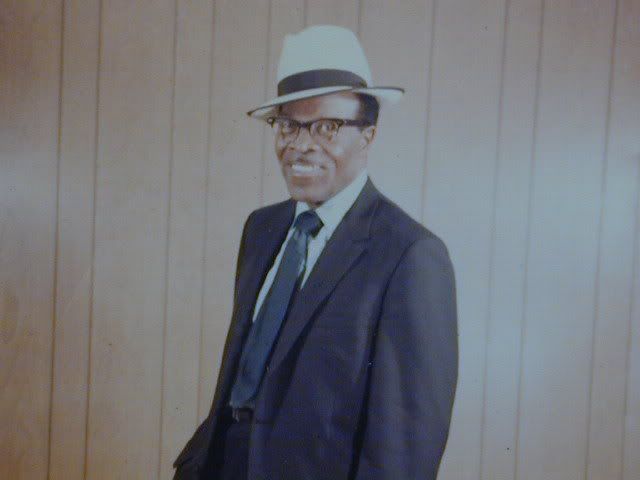
This time it was an African-American family, and the photographs go back to the 1930s or 40s and run up toward the end of the 1980s. There are four photo albums and another hundred or more loose photos as well. They chronicle weddings, births, deaths and funerals. There are pictures of black men in uniform at the end of WWII. The photos seem to represent Indianapolis, Kentucky and Philadelphia as the locations for gatherings and relations.
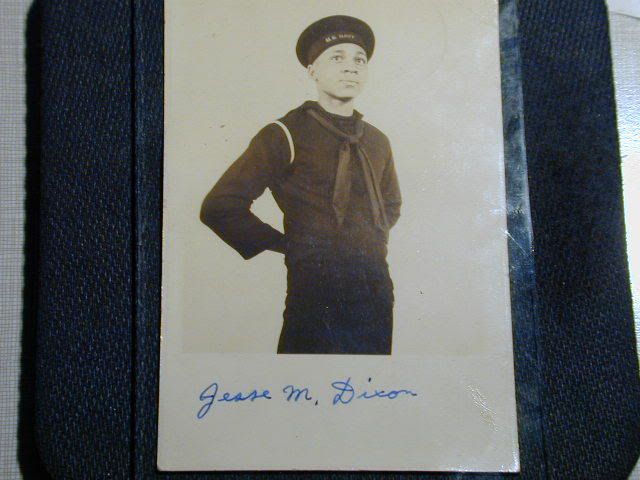
One friend I emailed the photos to replied that the 1930 census shows no Jesse Dixon in Indiana, but shows six Jesse Dixon's in Kentucky (2 in Jefferson and one each in Boyd, Floyd, Hardin, and Lewis). This is, I imagine, the sort of stuff a journalist might do in a search for survivors.
There’s an official file photo of a fortyish-year old black woman from the Philadelphia Naval Ship Yards in Philadelphia and, near that, is a page of photos of various children and adults taken at different Philadelphia tourist locations.
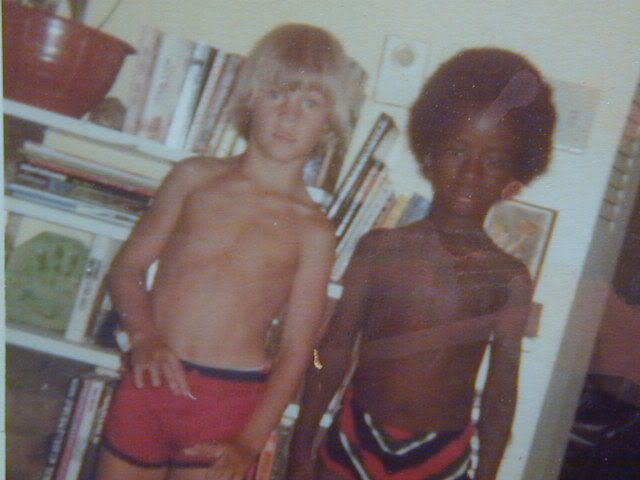
The photos from the 1970s are great; all the men have enormous afros and look like members of Parliament Funkadelic.

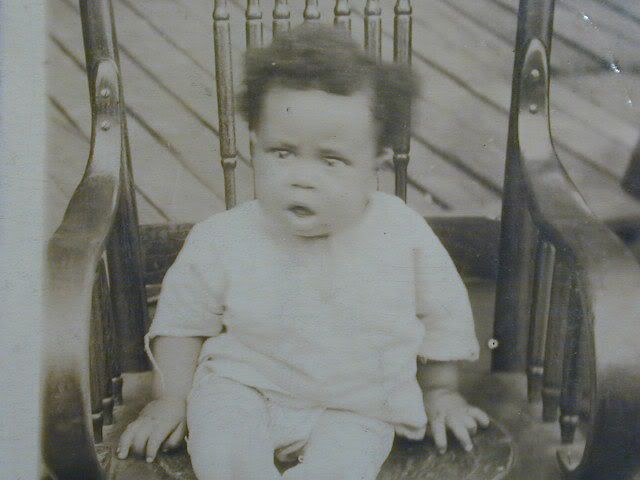
I’ve gone through the photos three times now. The first time I was just overwhelmed by the amount and variety of images. The second time I found myself looking at all the children; baby pictures, five and six year olds playing in yards, and thinking about the roughly 12% of all black men in their 20s in prisons in the US. According to “One in 100: Behind Bars in America 2008,” published by the Pew Center on the States, one in nine Black men between the ages of 20-34 are incarcerated compared to one in 30 other men of the same age. Like the overall adult ratio, one in 100 Black women in their mid-to-late 30s is in prison. I find it impossible to look at these photos and not think of that.

The third time I went through these an interesting thing happened.
They turned into my family photos. They became
everyone’s family photos; the same odd composition, the same weddings, the same parties, the same vacations. The ones from the late 40s and 50s are the most “posed.” Getting your picture taken was a bigger deal then. Some of the photos are actually post cards, a practice common to the times when you were going to be sending out the photos of a new baby or a cousin or nephew who just finished basic training.
The 1960s were the time for glossy black & white snapshots. Everybody had a camera by now. Photos become more common and plentiful, more casual and less posed. This is the time of the tilted angles, strangely cropped images and odd accidental lighting effects. I love photos from that era. The 1960s were a period of unbridled possibility; the people in these photographs look like they’re at the beginning of a great adventure.

In the 1970s and 1980s the photos shift again to hundreds of Polaroid pictures, rich, saturated colors, softer focus, even more casual. *These photos end in the late 1980s. Our paths, the people in these photos and mine, just missing as I think whoever the person was who lived in that house was gone by 1987, the year we arrived in Indianapolis and a couple years before we bought the house across the street.
 One photo in particular seems to be a metaphor for the entire journey of this family through time. There are two young men in naval uniforms, side by side. The photo was either in direct sunlight for a long time or wasn’t fixed properly when it was printed but the image has almost disappeared. The sailors, once proud and full of energy and promise, are now the ghosts of sailors, almost entirely gone from this world.

And the visual history of our lives has been transformed yet again as we move into the new century. Now, instead of boxes of photos and albums bulging with wedding and vacation photos, we have hard drives stuffed with images. Digital photography means that taking 600 photos of your weekend in St. Louis is no big thing. It will be old PCs sitting out for the trash in the days ahead, and nothing to catch the attention of dog walkers in the future.
Everyday in Indianapolis, like every day in every city and town in America, the Sanitation Department comes and picks up the trash and I suspect trashcans stuffed with family histories are not that uncommon and may even collectively represent their own layer in every landfill in the country.
Americans are more nomadic than most other developed nations. I don’t know if it’s far less common for family photos to end up in the dustbin in France or England but my guess is that it would be. The most amazing example of history pulled from the void at the last possible second I have experienced involves a fiery shoebox, Henry Miller and Man Ray, a story that can be found
here.
Earlier today a reporter and photographer from The Indianapolis Star and a senior archivist of African-American History from the Indiana Historical Society came over and took the albums and photographs. We sat around for an hour or so looking through all of it; we walked to the empty house and met with the contractor who took us into the basement and garage where even more photos of the black family, and a whole new collection of family pictures of a white family, were discovered. The reporter will try and track down someone from the family who might be stunned to see what just escaped destruction. If no one can be found the photos will be archived at the Historical Society where they will become another set of pieces in an enormous and ever-growing family album.
This would never have happened if we still had cats.