Showing posts with label pop music. Show all posts

Sunday, July 3, 2011

This is 1965....


"If you would understand anything, observe its beginning and its development." - Aristotle

The years 1965 and 1966 represent a sort of peak in popular music, bound up in a kind of homogeneity that would never happen again; shattered by a gradual crawl toward fragmentization and the compartmentalization that defines contemporary popular culture. It is also across these two years that pop begins to morph into rock and lose it's status as ephemeral teenage fascination. As the performers in the post-British Invasion second age of rock and roll travel through their twenties, they begin to take more and more control of the processes that had traditionally been the realm of the "suits" who packaged and marketed the music. In 1965, pop performers are all still well ensconced in "the show business", but the signs are there of something larger lying just ahead.

The fans, too, are growing up, leaving high schools and heading to universities, and in never-before seen numbers. The "baby boom" that was wearing Beatle wigs and screaming at the Ed Sullivan Show just a year ago is now becoming politicized by the perfect storm of the draft and Vietnam, and using the added gravitas of the civil rights and anti war movements to become conscious of itself as a generation in a manner that rarely happens. These things would all reach a boil in the period of 1967-1969, but the seeds of it all are present in the period of 1965-1966.

Sometimes my head gets stuffy with facts.  Names, dates and places all jumble together and I occasionally need to stop and gain a better purchase on what things correspond to what things, and what other things are years apart.

As 1965 begins, LBJ, who will be sworn in for his own full term as President on January 20th, first uses the phrase "The Great Society" in his State of the Union address on the 4th. On January 24th, as if ringing a large bell to announce the start of a new era, Sir Winston Churchill dies as "Downtown" hits #1 and makes Petula Clark the first British female performer to top the charts since the arrival of The Beatles. In February, The Rolling Stones Now! and John Coltrane's A Love Supreme are released, and Malcolm X is assassinated in Manhattan.

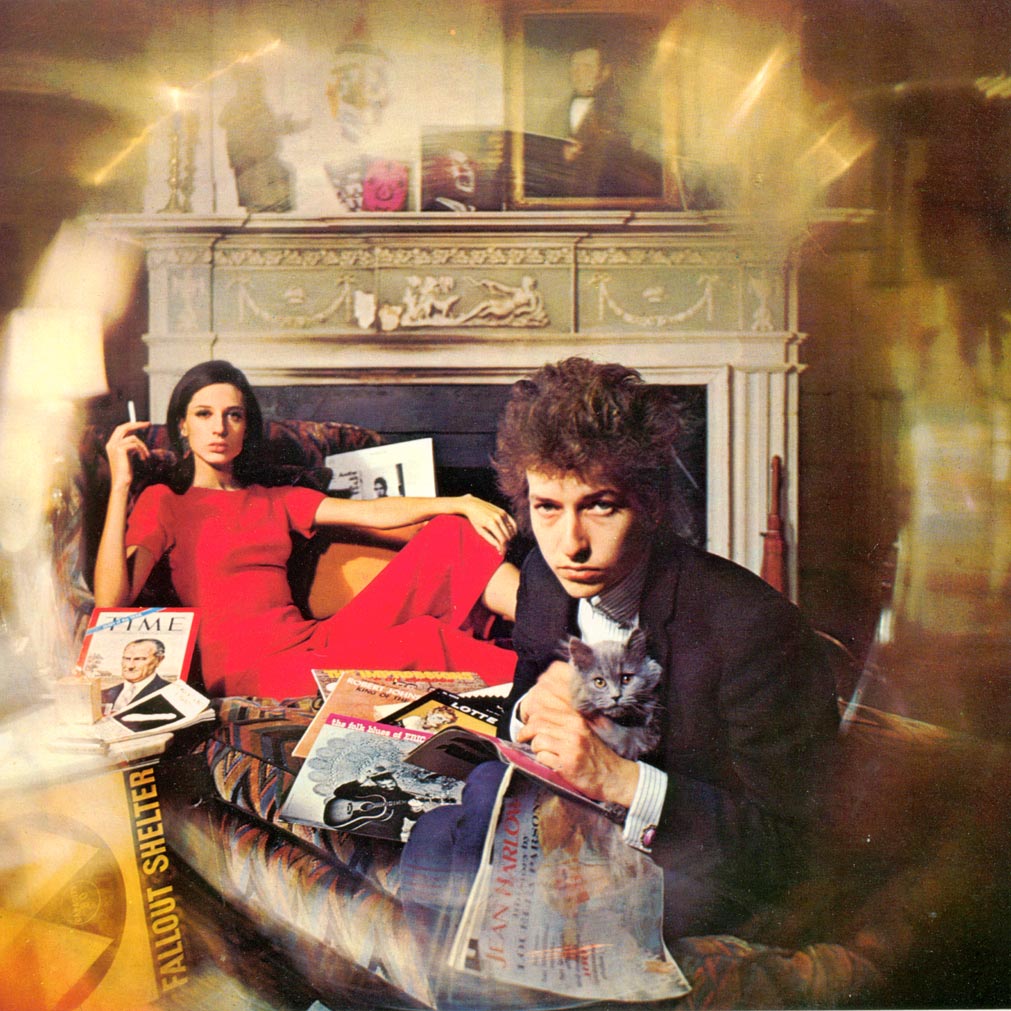
In March, civil rights demonstrators clash with state troopers in Selma Alabama while some 3,500 US Marines become the first American combat troops in Vietnam. A Russian cosmonaut becomes the first person to ever walk in space while the bill that will become the Voting Rights act of 1965 is introduced to Congress. Also in March, the Temptations have their first hit, "My Girl" while the Supremes have their fourth number one single, "Stop! In The Name Of Love" and Mick Jagger, Keith Richards, and Bill Wyman are fined five pounds for urinating on the wall of a London gas station. Albums released in March 1965 include Kinda Kinks, The Beach Boys Today!, Buck Owens' I've Got a Tiger by the Tail, Elvis Presley's Girl Happy and Bob Dylan's Bringing It All Back Home.

In April, the US launches the world's first space nuclear power reactor. The Houston Astrodome opens. The 100th anniversary of the end of the American Civil War is observed. My Fair Lady wins 8 Academy Awards, Mary Poppins wins 5. Richard Hickock and Perry Smith, convicted of murdering 4 members of the Herbert Clutter family of Holcomb, Kansas, are executed by hanging at the Kansas State Penitentiary for Men. The West German parliament extends the statute of limitations on Nazi war crimes. The first SDS march against the Vietnam War draws 25,000 protesters to Washington, DC. Among the albums released are My Funny Valentine by Miles Davis and Whipped Cream & Other Delights by Herb Alpert and the Tijuana Brass. The New Musical Express poll winners' concert takes place featuring performances by The Beatles, The Animals, The Rolling Stones, Freddie and the Dreamers, the Kinks, the Searchers, Herman's Hermits, The Anita Kerr Singers, The Moody Blues, Wayne Fontana and the Mindbenders, Donovan, Them, Cilla Black, Dusty Springfield and Tom Jones.

In May 1965, forty men burn their draft cards at the University of California, Berkeley, and a coffin is marched to the Berkeley Draft Board. The largest teach-in to date begins at Berkeley, California, attended by 30,000. The first skateboard championship is held. Muhammad Ali knocks out Sonny Liston in the first round of their championship rematch. Alan Price leaves The Animals. Keith Richards and Mick Jagger begin work on "Satisfaction" in their Clearwater, Florida hotel room (Richards came up with the classic guitar riff while playing around with his brand new Gibson "Fuzz box"). Bob Dylan performs the first of two concerts at London's Royal Albert Hall, concluding his tour of Europe. Audience members include The Beatles, and Donovan. Albums released include What's Bin Did and What's Bin Hid by Donovan, Maiden Voyage by Herbie Hancock and My Name Is Barbra by Barbra Streisand.

In June 1965 the first contingent of Australian combat troops arrives in South Vietnam. Gemini 4 astronaut Edward Higgins White makes the first U.S. space walk. In the Battle of Dong Xoai, about 1,500 Vietcong mount a mortar attack, overrunning the military headquarters and the adjoining militia compound. A planned anti-war protest at the Pentagon becomes a teach-in, with demonstrators distributing 50,000 leaflets in and around the building. In Algeria, Houari Boumédienne's Revolutionary Council ousts Ahmed Ben Bella, in a bloodless coup. Producer Tom Wilson records a heavy backing band onto the song "The Sounds of Silence", without the knowledge of Paul Simon. The Supremes have their fifth consecutive number one single,"Back In My Arms Again." The Beatles are made Members of the British Empire (MBE) by the Queen. The albums The Angry Young Them, Beatles VI and Mr. Tambourine Man by The Byrds are released.

And we're half way through 1965.

Turn on the radio and pop music is one loud contradictory swirl of sound rushing out of every AM car radio and hand-held transistor, all playing the same sounds day in day out. The Billboard Top 40 songs of 1965 include "Wooly Bully" Sam The Sham and The Pharaohs; "I Can't Help Myself (Sugar Pie, Honey Bunch)" Four Tops; "(I Can't Get No) Satisfaction" The Rolling Stones; "You Were On My Mind" We Five; "You've Lost That Lovin' Feelin'" Righteous Brothers;  "Downtown" Petula Clark; "Help!" The Beatles; "Can't You Hear My Heartbeat" Herman's Hermits; "Crying in the Chapel" Elvis Presley; "My Girl" Temptations; "Help Me, Rhonda" Beach Boys; "King of the Road" Roger Miller; "The Birds And The Bees" Jewel Aikens; "Hold Me, Thrill Me, Kiss Me" Mel Carter; "Shotgun" Jr. Walker and The All Stars; "I Got You Babe" Sonny and Cher; "This Diamond Ring" Gary Lewis and The Playboys; "The "In" Crowd" Ramsey Lewis Trio; "Mrs. Brown You've Got a Lovely Daughter" Herman's Hermits; "Stop! In The Name Of Love" Supremes; "Unchained Melody" Righteous Brothers; "Silhouettes" Herman's Hermits' "I'll Never Find Another You" Seekers' "Cara Mia" Jay and The Americans; "Mr. Tambourine Man" Byrds; "Cast Your Fate To The Wind" Sounds Orchestral; "Yes I'm Ready" Barbara Mason; "What's New Pussycat?" Tom Jones; "Eve of Destruction" Barry McGuire; "Hang On Sloopy" McCoys; "Ticket To Ride" The Beatles; "Red Roses For A Blue Lady" Bert Kaempfert and His Orch.; "Papa's Got A Brand New Bag" James Brown and The Famous Flames; "Game Of Love" Wayne Fontana and The Mindbenders; "The Name Game" Shirley Ellis; "I Know a Place" Petula Clark; "Back In My Arms Again" Supremes; "Jolly Green Giant" Kingsmen; :Hush, Hush, Sweet Charlotte" Patti Page; "Like a Rolling Stone" Bob Dylan.

In July 1965 the spacecraft Mariner 4 flies by Mars, becoming the first spacecraft to return images from the Red Planet. Edward Heath becomes Leader of the British Conservative Party. President Johnson announces his order to increase the number of troops in South Vietnam from 75,000 to 125,000, and to more than double the number of men drafted per month - from 17,000 to 35,000. Later in July the President signed the Social Security Act of 1965 into law, establishing Medicare and Medicaid. On July 25, Bob Dylan plays Newport Folk Festival, is booed for playing electric set with The Paul Butterfield Blues Band. Joan Baez and Donovan also play sets. In July, the albums For Your Love by The Yardbirds, Summer Days (and Summer Nights) by The Beach Boys and Out of Our Heads by The Rolling Stones are released.

In August, cigarette advertising is banned on British television. President Johnson signs the Voting Rights Act of 1965 into law. The Watts Riots begin in Los Angeles California. The Jefferson Airplane debuts at the Matrix in San Francisco, California and begins to appear there regularly. The Beatles perform the first stadium concert in the history of rock, playing at Shea Stadium in New York. Casey Stengel announces his retirement after 55 years in baseball. At the Auschwitz trial in Frankfurt, 66 ex-SS personnel receive life sentences, 15 others smaller ones. The Beatles visit Elvis Presley at his home in Bel-Air. It is the only time the band and the singer meet. The Small Faces release "Whatcha Gonna Do About It", their first single. The Beatles release the soundtrack to their second movie Help! The Paul Simon Song Book, a solo LP by Paul Simon, is released in the UK (but not in the US). Bob Dylan releases Highway 61 Revisited, the second LP in his 1965-66 "trilogy."

In September 1965 Pakistani troops enter the Indian sector of Kashmir, while Indian troops try to invade Lahore. Islamic Republic Of Pakistan observes its Defence day. Hurricane Betsy roars ashore near New Orleans, Louisiana with winds of 145 MPH, causing 76 deaths and $1.42 billion in damage. The Tom & Jerry cartoon series makes its world broadcast premiere on CBS. Sandy Koufax pitches a perfect game against the Chicago Cubs. Donovan appears on Shindig! in the U.S. and plays Buffy Sainte-Marie's "Universal Soldier". The Animals release Animal Tracks and Otis Redding releases Otis Blue.

In October 1965 John Coltrane releases Om, the Paul Butterfield Blues Band's first album is released, Donovan releases Fairytale, and Frank Sinatra releases September of My Years. Jimi Hendrix signs a three year recording contract with Ed Chaplin, receiving $1 and 1% royalty on records with Curtis Knight (an agreement that later causes continuous litigation problems with Hendrix and other record labels). The Animals make their fourth appearance on The Ed Sullivan Show. Fidel Castro announces that Che Guevara has resigned and left the country. Anti-war protests draw 100,000 in 80 U.S. cities and around the world. In Washington, DC, a pro-Vietnam War march draws 25,000. The University of California, Irvine opens its doors.

November 1965: Republican John Lindsay is elected mayor of New York City. Pillsbury's world-famous mascot, the Pillsbury Doughboy, is created. Man of La Mancha opens in a Greenwich Village theatre in New York and eventually becomes one of the greatest musical hits of all time. Bob Dylan weds Sara Lowndes. The Pentagon tells U.S. President Lyndon B. Johnson that if planned major sweep operations to neutralize Viet Cong forces during the next year are to succeed, the number of American troops in Vietnam will have to be increased from 120,000 to 400,000. The Supremes have their sixth number one record, "I Hear A Symphony", for Motown Records. Arlo Guthrie is arrested in Great Barrington, Massachusetts for the crime of littering, perpetrated the day before Thanksgiving in the nearby town of Stockbridge. The resultant events and adventure would be immortalized in the song "Alice's Restaurant". Among the albums released in November are Having a Rave Up with The Yardbirds, The Kink Kontroversy, Do You Believe in Magic (The Lovin' Spoonful), E.S.P. (Miles Davis), Farewell Angelina (Joan Baez) and Going To a Go-Go (Smokey Robinson & the Miracles).

December 1965: The Who release My Generation, The Beatles release Rubber Soul, The Byrds release Turn! Turn! Turn! and The Rolling Stones release December's Children (And Everybody's). The Beatles also release their double A-sided single "Day Tripper / We Can Work It Out." Meanwhile, Charles de Gaulle is re-elected as French president and Ferdinand Marcos becomes President of the Philippines. A Charlie Brown Christmas, the first Peanuts television special, debuts on CBS. The Soviet Union announces that it has shipped rockets to North Vietnam. David Lean's film, Doctor Zhivago, is released.

Some of the bands that formed for the first time in 1965 include: The Doors, Grateful Dead, Jefferson Airplane, Los Jairas, Velvet Underground, and Pink Floyd.

Among the other records released in 1965 were: At The Golden Circle Vol. 1 & 2 by Ornette Coleman. Bleeker & MacDougal by Fred Neil. Catch Us if You Can by The Dave Clark Five. Celebrations For a Grey Day by Richard Farina and Mimi Farina. Country Willie: His Own Songs by Willie Nelson. Creation by John Coltrane. The Fugs First AlbumThe Heliocentric Worlds of Sun Ra, Volume 1 & 2. Hoodoo Man Blues by Junior Wells. I Ain't Marching Anymore by Phil Ochs. Jackson C. Frank. Live at the Regal by B. B. King. Odetta Sings Dylan. Skip James Today! The Transfiguration of Blind Joe Death by John Fahey.

In television, Today on NBC goes color. The Huntley-Brinkley Report on NBC goes color. CBS airs the first color broadcast of an NFL football game, a Thanksgiving Day matchup between the Baltimore Colts and Detroit Lions. My Mother, the Car premieres on NBC. CBS debuts Lost in Space and Green Acres. Meanwhile, on ABC, The Big Valley premieres, and NBC launches I Spy. The Wild Wild West and Hogan's Heroes premiere on CBS. I Dream of Jeannie premieres on NBC, and so does Get Smart.

At the Academy Awards, The Sound of Music takes Best Picture, and Lee Marvin (Cat Ballou) and Julie Christie (Darling) win Best Actor/Actress. The Palme d'Or at the Cannes Film Festival goes to The Knack …and How to Get It, directed by Richard Lester. Other films from 1965 include: Alphaville, (Alphaville, une étrange aventure de Lemmy Caution'), directed by Jean-Luc Godard; Bunny Lake Is Missing, directed by Otto Preminger; Faster, Pussycat! Kill! Kill!, directed by Russ Meyer; For a Few Dollars More, directed by Sergio Leone; The Ipcress File, directed by Sidney J. Furie; What's New Pussycat?, directed by Clive Donner.

In addition to Winston Churchill, Albert Schweitzer, Alan Freed, Nat King Cole, Spike Jones, Stan Laurel, Margaret Dumont, T.S. Eliot, Edward R. Murrow, Edgard Varèse, Sonny Boy Williamson and Jeanette MacDonald died in 1965. Rob Zombie, Dr. Dre, Trent Reznor, Courtney Love, Shania Twain, Slash, Björk, Moby, Andy Dick, Robert Downey, Jr. and Rodney King were born.

Monday, February 9, 2009

The Day the Earth Stood Still....


February 9, 1964. Forty-five years ago today The Beatles made their first appearance on The Ed Sullivan Show and... pick one.

(1) The "Sixties" officially started.

(2) The decline and fall of Western Civilization got underway.

(3) Two months and eighteen days after we buried a President it was OK to smile again.

The first wave of rock & roll had been repelled. By February 9, 1964 Elvis was in the Army, Chuck Berry was in prison, Jerry Lee Lewis was in exile, and Little Richard had gone to church. Put in their place were the teen idols: Bobby Rydell, Paul Anka, Fabian, Dion. In a government laboratory scientists were able to successfully remove every molecule of soul and humanity from the songs of Fats Domino and Little Richard and grow Pat Boone in a test tube.

But the first battle had been fought with conventional weapons. On February 9, 1964, The Ed Sullivan Theater was added, just below Hiroshima, Nagasaki and the Bikini Atoll, to the list of sites where nuclear weapons had been detonated.

Watch it today, and the energy is still there.

Friday, January 30, 2009

Up On the Roof....


London, 3 Savile Row, January 30, 1969. Two and a half years (which, in pop music years, is about ninety-seven) after their last live performance on August 29, 1966, at Candlestick Park in San Francisco, The Beatles (plus one) set up equipment on the rooftop of their London head quarters and played live for what would turn out to be the very last time.

The initial idea - of the concert and of the album and of the film - was right there in the working title, "Get Back." The growing sense of separation of John, Paul and George into individual solo artists -- well illustrated by the White Album; 2 LPs that often seems like a collection of solo tracks -- and the disintegration of the very idea of the Fab Four had given McCartney the idea that the band needed to move away from the complex studio effects and heavily arranged music that had become their specialty and "get back" to basics. Unadorned, straight forward, basic rock & roll.

The album was to be called Get Back, the cover photo had been taken and had the four Beatles on the same EMI stairwell they'd posed on in 1963 for their debut LP. This idea had three parts: the album, an accompanying "making of" film, and a live performance. Various ideas had been floated for the live show, a small club gig, an invited audience on an ocean liner, etc.

The reality however was inescapable. The four musicians had grown up and grown apart. Remember that, as the band slowly fell apart leading up to rooms full of nothing but lawyers, not one of the Beatles -- not John, Paul, George or Ringo -- had yet turned thirty. Eventually the theme of "Get Back" was replaced by the more dour-sounding "Let It Be." The film that was eventually issued was structured around this central theme of break down and dissolution, which is a shame because the boys clearly could still play.

The rooftop concert demonstrates that, at the bitter end, there is no denying that these musicians were still capable of pure unadulterated magic. Below is the final performance in three video segments. Enjoy.


Saturday, April 28, 2007

Bringing It All Back Home… Side Two

If side one suggests, lyrically, a crack in the dam, on side two the levee breaks, the concrete crumbles… pray for those people in the houses down in the valley.

Yes, “Mister Tambourine Man” is a reference to guitarist Bruce Langhorn, but this is clearly not to suggest that the song has anything to do with Langhorn. It’s easy to read the text as a drug song as well – “Take me on a trip…” “The smoke rings of my mind…” but that’s a bit too easy too. I believe the pleasures here are all right on the surface, not to be found in some deeper meaning needed to be dug out.

Now the language play begins in earnest.

The magnificent parody video of “Subterranean Homesick Blues” done by Weird Al would never work here. These lyrics can’t be replaced by nonsense verse and palindromes. It’s also right that the rock band backing is gone too, nothing here to get in the way of Dylan the writer, the wordsmith.

“My weariness amazes me, I'm branded on my feet / I have no one to meet /And the ancient empty street's too dead for dreaming.”

“Though you might hear laughin', spinnin', swingin' madly across the sun / it's not aimed at anyone / it's just escapin' on the run /And but for the sky there are no fences facin'.”

And he saves the best for last. The “one hand waving free” calls up my favorite line in any Springsteen song – “What else can we do now but roll down the window and let the wind blow back your hair?” Find me a popular image of FREEDOM in which something isn’t waving. Go on, I double dog dare you.

“Then take me disappearin' through the smoke rings of my mind
Down the foggy ruins of time, far past the frozen leaves
The haunted, frightened trees, out to the windy beach
Far from the twisted reach of crazy sorrow.
Yes, to dance beneath the diamond sky with one hand waving free
Silhouetted by the sea, circled by the circus sands
With all memory and fate driven deep beneath the waves
Let me forget about today until tomorrow.”

The Byrds added McGuinn’s Rickenbacker 12-string – a guitar whose distinctive sound is not just in the novelty of an electric 12-string guitar, but in the way the Rickenbacker is strung on the lower 3 sets of strings with the octave strings in the opposite position than they are on other makes of 12-strings – and changed the time signature. And, as good as it is, their version is more a novelty that Dylan’s acoustic recording which has a certain naturalness to its presentation that suggests some sort of psychedelic troubadour.

I have a friend in New York who collects rare psychedelic records and is a Dylan fan, but bristles at the description of these records as psychedelic; something I find genuinely puzzling as Dylan’s LSD use starts around the time of Another Side and can be heard rising up in the lyrics of songs like “Chimes Of Freedom.” To me, the 1965-1966 trilogy seems increasingly acid-fueled as it grows in intensity; much like John Wesley Harding seems so ahead of the curve as far as post-acid music is concerned.

“Gates of Eden” and “It’s Alright, Ma (I’m Only Bleeding)” seem to me cut from the same cloth as “A Hard Rain.” I’ve long suspected The Doors got the idea of ending their records with their own epic songs (“The End” “When the Music’s Over”) from this and the next couple records. And what better way to announce “This is an epic” than to begin with a reference to the mother-of-all epics.

“Of war and peace the truth just twists / its curfew gull just glides.”

The lines that end “the gates of Eden” are interesting too for the choice of “inside” “outside” etc. It seems like a precursor to “Desolation Row” in that regard. “Mail them from (not “too”) Desolation Row… etc.” By the next record the rather stern, foreboding – I always imagine them made of wrought iron – gates of Eden get transformed into the run-down funky neighborhood of “Desolation Row.” Creatively, it’s a move that suggests an Old Testament story rewritten as a John Steinbeck novel.

“Gates of Eden” is stuffed full to bursting with a tableau of characters that leap forth from Dylan’s inflamed imagination. The curfew gull, the cowboy angel, a lamp post that stands with folded arms and iron claws; the savage soldier, shoeless hunter, utopian hermit monks… the list expands throughout the song as these vague, half-formed images root around in your mind, reaching one of its peaks is the fourth from last verse:

“The motorcycle black Madonna, two-wheeled gypsy queen
And her silver-studded phantom cause the gray flannel dwarf to scream
As he weeps to wicked birds of prey who pick up on his bread crumb sins
And there are no sins inside the Gates of Eden”

That dichotomy is one that I think Dylan borrows from the Beats – the hip outsider world versus the square gray flannel world – and it’s clear which side Dylan prefers (remember too how the gray flannel world continually tries to capture that icon of resistance and co-opt it. See: the Fonz).

One of Dylan’s strongest 1990s songs is the outtake “Series of Dreams” and I think many of the songs from 1965 can be approached as series of dreams. The closing verse here sort of supports that idea:

“At dawn my lover comes to me, and tells me of her dreams
With no attempts to shovel the glimpse into the ditch of what each one means
At times I think there are no words but these to tell what's true
And there are no truths outside the Gates of Eden.”

Close your eyes and try to imagine bringing Bringing It All Back Home home in March of 1965. Maybe it’s a little chilly, that last little bit of winter hanging on before the world changes. Back then Columbia records were not sold in plastic shrink wrap. The record was sealed inside the cover, it came in a plastic inner sleeve that had a perforated edge that you had to tear off to open the sleeve and take the disc out. The edge always ended up tearing the bag itself, so, there you are, that little strip of plastic in your hand, setting the disc down onto the platter of your Garrard turntable, your copy of Another Side of Bob Dylan leaning up against one speaker, dropping the tone arm and BOOM!

You just sat through the most amazing side one of a record, probably ever. Your head is spinning, you can barely remember your own name; you stumble back to the player and flip the record over and drop the arm on side two. While the blaring electric yowl of side one is gone, the simple acoustic arrangements put the exploding surrealism of the lyrics even more front and center.

You’re not in Kansas anymore.

The structure of “It’s Alright, Ma (I’m Only Bleeding)” is five sets of three verses each divided by a series of three-line refrains that stick a variation of the title in the last if the three lines. There is a relentlessness here that actually works against the song after a bit, at least it seems that way to me now, 40 years later. We’re told “there is no use in trying” because “he not busy being born is busy dying” and we’re really just “one more person crying.” And “while others say don't hate nothing at all except hatred” “it's easy to see without looking too far that not much is really sacred” and “even the president of the United States sometimes must have to stand naked” (a line that caused crowds to explode in the fires of Watergate when Dylan returned to the road in 1974 after an eight year absence).

The third set of verses reminds me of a section in Dylan’s magnificent “Last Thoughts on Woody Guthrie.” Compare this set of verses about half way through “It’s Alright, Ma…”

“Advertising signs that con
You into thinking you're the one
That can do what's never been done,
That can win what's never been won
Meantime life outside goes on
All around you.

You lose yourself, you reappear
You suddenly find you got nothing to fear
Alone you stand with nobody near
When a trembling distant voice, unclear
Startles your sleeping ears to hear
That somebody thinks
They really found you.

A question in your nerves is lit
Yet you know there is no answer fit to satisfy
Insure you not to quit
To keep it in your mind and not forget
That it is not he or she or them or it
That you belong to.”

…to this section of “Last Thoughts on Woody Guthrie”

"Cause you can't find it on a dollar bill
And it ain't on Macy's window sill
And it ain't on no rich kid's road map
And it ain't in no fat kid's fraternity house
And it ain't made in no Hollywood wheat germ
And it ain't on that dimlit stage
With that half-wit comedian on it
Ranting and raving and taking yer money
And you thinks it's funny
No you can't find it in no night club or no yacht club
And it ain't in the seats of a supper club
And sure as hell you're bound to tell
That no matter how hard you rub
You just ain't a-gonna find it on yer ticket stub
No, and it ain't in the rumors people're tellin' you
And it ain't in the pimple-lotion people are sellin' you
And it ain't in no cardboard-box house
Or down any movie star's blouse
And you can't find it on the golf course
And Uncle Remus can't tell you and neither can Santa Claus
And it ain't in the cream puff hair-do or cotton candy clothes
And it ain't in the dime store dummies or bubblegum goons
And it ain't in the marshmallow noises of the chocolate cake voices
That come knockin' and tappin' in Christmas wrappin'
Sayin' ain't I pretty and ain't I cute and look at my skin
Look at my skin shine, look at my skin glow
Look at my skin laugh, look at my skin cry
When you can't even sense if they got any insides.”

I also hear strong similarities in the way this has to be sung and with “Subterranean Homesick Blues.” I’d love to discover a lost outtake in which that same band rocked-out on a version of “It’s Alright, Ma…” Try to imagine these lyrics sung on top of that driving electric band with Michael Bloomfield’s guitar at the wheel:

“While them that defend what they cannot see
With a killer's pride, security
It blows the minds most bitterly
For them that think death's honesty
Won't fall upon them naturally
Life sometimes must get lonely.

My eyes collide head-on with stuffed graveyards
False gods, I scuff
At pettiness which plays so rough
Walk upside-down inside handcuffs
Kick my legs to crash it off
Say okay, I have had enough
What else can you show me?”

“What else can you show me?” indeed.

Maybe the album opens with “It used to go like that, now it goes like this” which is kind of an aggressive way of saying “things have changed.” But the album ends on a more melancholy note, as if Dylan accepts that his exit from the Folk/Protest Pantheon can never be that easy. Hearing this the first time in the swirling context of “Dylan has sold out!” and condemnations in Sing Out! magazine (with the wonderful reply from Johnny Cash who, at that time, hadn’t yet met Bob) and the story of how, after being booed from the stage at Newport, Dylan returned with an acoustic guitar and played this song and then left (true, not true, who cares) it is without question that when you heard this song at the end of the acoustic side of this record you heard it as the most eloquent “Dear John” letter of all time, from Bob to the folk community.

“You must leave now, take what you need, you think will last.
But whatever you wish to keep, you better grab it fast. . . . .
Look out the saints are comin' through
And it's all over now, Baby Blue.”

How many songs does this guy actually know? Who else takes “When the Saints Come Marchin’ In” and twists it into that line, “Look out now, the saints are comin' through….”?

Ancient New Orleans idiom music recycled as end of an era folk melancholia.

Jesus.

The thing that just knocks me off my feet and won’t let me up is this endless parade of characters, all arising as if from the subconscious of the body of 20th century modernist literature. The list grows: the orphan with his gun (how do you cry “like a fire” anyway?), the empty-handed painter, seasick sailors, reindeer armies, and the vagabond who's rapping at your door.

Listen to the explosion of songwriters A.D. (After Dylan) as they all do their best to populate their songs with similar characters. Just off the top of my head, look at this cast of characters from “Blinded By the Night,” the opening track off Bruce Springsteen’s first album:

Madman drummers bummers and Indians in the summer (with a teenage diplomat), some all-hot half-shot, some fleshpot mascot, young Scott with a slingshot, some brimstone baritone anti-cyclone rolling stone preacher from the East, some new-mown chaperone, some fresh-sown moonstone, some silicone sister with her manager's mister, and Go-Cart Mozart, little Early-Pearly, some hazard from Harvard, and some kidnapped handicap. And, if there’s room, add Crazy Janey, her mission man, Wild Billy with his friend G-Man, Hazy Davy and Killer Joe (from the cast of “Spirits in the Night”).

I don’t quite know what to make of the fact that this is also a record of my own time.

My memories of 1965 are hazy at best, I would have been 12 years old in March of that year, and turned 13 in late August. I can’t say for sure but I’m fairly certain I came to Dylan via The Beatles. My earliest recollection of The Beatles is an interesting one, I think.

I remember sitting in a classroom in the Catholic grade school I attended when the voice of the Mother Superior came over the public address system. She told us that the parish priest had something important to tell us. The appearance of the priest on the school’s PA was reserved for the deaths of presidents or a 5 minute heads up before a full scale first strike by the Russians. Duck and cover my 4th grade Polish ass… we were nervous.

“Boys,” the disembodied voice intoned; “I want you all to understand in no uncertain terms that beetle haircuts will not be tolerated.”

That was it.

It was like one of those coded messages transmitted over allied radio in enemy territory, “The captain has embarked and we will engage the fish in October; I repeat, the captain has embarked and we will engage the fish in October. That is all.”

But I didn’t have the code. And as I looked around at my fellow Catholic youth, in our matching uniforms of short-sleeve white shirts and blue plaid school ties, I could tell no one else did either. No matter, whatever it was, we wanted one. This was probably in December 1963 and may mark the actual start of the sixties.

I was with the Beatles starting with that first Ed Sullivan Show appearance in February 1964. This was where the fuse of my later record collecting self was lit. At some moment in there, with some LP or single, I must have experienced that first, primal pleasure rush that comes when you show someone something you have that they don’t have and you can see them want it and realize you feel good because it makes them feel bad.

It’s hard to describe the heady rush of those times; the acceleration of the culture. Think of it this way: The Beatles released the albums Meet The Beatles, The Beatles’ Second Album, Something New, A Hard Day’s Night, Beatles 65, The Early Beatles, Help!, Beatles VI, Rubber Soul, Yesterday and Today, and Revolver in 1964-1965.

During that same period Bob Dylan released The Times They Are A-Changing, Another Side of Bob Dylan, Bringing It All Back Home, Highway 61 Revisited and Blonde On Blonde.

Rufus Wainwright released five albums between 1998 and 2007, and he’s fairly prolific by contemporary standards.

If your own adolescent consciousness was forming at that same time, if your own growth covered a comparable distance from “I Want To Hold Your Hand” to “Tomorrow Never Knows” or from “Boots of Spanish Leather” to “Visions of Johanna” then it’s in that context that a 12 year-old runs out to buy Bringing It All Back Home when it hit the stores in March/April 1965.

So…. It’s the impact of living through those times versus hearing this record for the first time in 2007 that I can’t quite measure. I just don’t know if it means anything or, if it does, what it means.

The recent CD remaster of Bringing It All Back Home is exceptionally well done with sound that rivals the original vinyl pressing. Some Dylan fans complained that the Dylan remastered CDs were too short and should have added some bonus material but I think “bonus tracks” are a curse of the CD age; most especially true for reissues of genuinely great albums. Should this ever get reissued again with a bunch of outtakes tacked on at the end, I’ll tell you now, I won’t buy it. This album needs extra material like The Bicycle Thief needs extra scenes.

Friday, April 27, 2007

Bringing It All Back Home... Side One


Bob Dylan’s second album, The Freewheelin’ Bob Dylan, was his first masterpiece; a record that, over forty records later, still stands as one of his best works. That record was followed by the dour and dated The Times They Are A-Changing, an album of Dylan, posing as a Dorothea Lang photo on the front, trying on the folk-protest “voice of his generation” crown and quickly finding it too binding, too restrictive.

His fourth album, Another Side of Bob Dylan, simultaneously benefits and suffers from being tossed off in one marathon wine-fueled session. The looseness that engenders helps, especially in light of the uptight album it follows. But ultimately the record serves a transitional role in Dylan’s catalog, connecting his earlier Woody Guthrie-rooted persona to the burst of creative energy that would follow.

And I don’t think it’s possible to overstate the enormity of that burst. It is the pop music equivalent of a star going nova. It was like looking at the energy released when the song writing atom was split for the first time. It was the equivalent of the Big Bang for all popular songwriting that came after. Dylan’s fifth album would start a chain reaction that would produce, not just the often described 1965-1966 trilogy of Bringing It All Back Home, Highway 61 Revisited and Blonde On Blonde, but also The Basement Tapes and John Wesley Harding, a series of five albums (7 discs) of museum quality work.

As I think about this e.e. cummings shows up in my mind, and a day-dreamed image of a 1965 Bob riding

a watersmooth-silver stallion

and breaking onetwothreefourfive pigeonsjustlikethat

Jesus

he was a handsome man

I’ve always thought the first side of Bringing It All Back Home, instead of “Side 1" right on the label and jacket should be labeled “It used to go like that, now it goes like this.”

“Subterranean Homesick Blues” With one foot in the proto-hip-hop lyrics of Chuck Berry and another in Public Enemy and a third (OK, so he's a tripod) in some sort of mutant blues/rockabilly there’s no first song side one of any other record I can think of that had a greater immediate visceral impact.

And it was the single!

In April 1965 this was streaming audio pushing its way out of AM car radios. I remember cars pulled over to the side of the road, people getting out, standing around, and looking up in the skies for the saucers.

There is a word that I can’t quite recall at the moment, something similar to kinesthesia, that has to do with the physical pleasure of speech ("rubber baby buggy bumpers, rubber baby….") and whatever that is, it goes to 11 in this song. It was fun to try and sing it in 1965 and remains fun in 2006. It’s impossible to hear it without recalling the proto-music video with the cue cards in the alley. The pleasure comes from the rhymes themselves more than from any specific meaning here. It’s tinged with the same surrealism that was seen in little glimpses on Freewheelin’ and gets turned up full blast on the next two records. It reminds me of the moment when Hemmingway figured out how to write dialogue in that thoroughly unique voice, or when Hendrix figured out how to control feedback and distortion. It’s a song that could be released tomorrow and be utterly contemporary. It is simply amazing.

The contrast of the frenetic character of the opener to “She Belongs to Me” introduces the hard/soft/hard/soft textural rhythm that ping-pongs through the first five tracks. Dylan’s new found surrealism works in both contexts. “She can take the dark out of the night time and paint the daytime black.” “She’s a hypnotist collector, you are a walking antique.” “For Halloween get her a trumpet, for Christmas, get a big drum.”

This is essential to understanding Dylan from this point on: it is NOT that these lines don’t “mean anything,” it’s that they don’t mean any ONE thing. It’s what poetry would look like at the quantum level where all solid matter becomes a blur, a vibration. Meaning doesn’t so much disintegrate as it becomes relative, just like Einstein predicted.

“Maggie’s Farm” is almost as up tempo and rocked-out as “Subterranean Homesick Blues.” It is this blend of surrealistic word-play with older, traditional musical form that grabs a hold of you here. The pleasure for me is in the contrast of the utterly alien with the very familiar; and he tells us right upfront in the very first verse “I got a head full of ideas/that are drivin' me insane.” The song itself is not nearly as clever as “Subterranean Homesick Blues”; it’s just a litany of complaints regarding each member of Maggie’s family. The power here is in the placement on the record. Using “Subterranean Homesick Blues” as the opener, Dylan feints with “She Belongs to Me” and then goes upside your head again with the agro-electricity of “Maggie’s Farm.”

“Love Minus Zero/No Limit” extends Dylan’s language play into his song titles, and what a song! I think it may be the best pure “love song” of his catalog. Four verses, no chorus or “middle eight” in sight – a technique that’s almost trance-inducing in his longer songs. The first and last verses are the most clear-headed. His love “speaks like silence” “is true like ice, like fire” “laughs like the flowers” can’t be bought with valentines. In the end, he uses the image of the most fragile thing, a bird with a broken wing. But those middle two verses… wow. You can find the seeds of Paul Simon’s career in, “In the dime stores and bus stations / People talk of situations / Read books, repeat quotations /Draw conclusions on the wall.” And that third verse just puts pedal to the metal: “The cloak and dagger dangles/Madams light the candles/In ceremonies of the horsemen/Even the pawn must hold a grudge/Statues made of match sticks/Crumble into one another/My love winks, she does not bother/She knows too much to argue or to judge.”

How thick does someone need to be to say that this is nothing but meaningless babble? At the same time, approaching it as if there’s a code that needs to be broken is just as thick an approach. The language is glorious; I let it wash over me.

Listening to “Outlaw Blues” always makes me think of Captain Beefheart’s avant-garde take on Howlin’ Wolf. I have a long-running fantasy of making a film about Jesse James and the period of Civil War reconstruction. At the end the credits roll over Bob Dylan singing the old folk song “Jesse James.” Even though Springsteen just recorded it, I haven’t altered my daydream one bit. I hear it in the film in my head and it sounds a lot like Bob singing “Dixie” in Masked & Anonymous. “That dirty little coward, who shot Mister Howard, and laid Jesse James in his grave.” Robert Ford shot Jesse from behind as he hung a picture frame in the only case on record of a state ordering the assassination of one of its citizens. My point here is simply that during this amazing 1965-66 run it sometimes seems that EVERY Dylan song can be opened like a box in a box in a box in a box and the meaning gushes out in waves.

“On the Road Again” and “Bob Dylan’s 115th Dream” are the last two pieces on the “It used to go like that, now it goes like this” album's first side. The opening fit of laughter from Bob & his producer at the failure of the entire band to come in at the start of the last song is perfect, like a small sticker with instructions on how to enjoy this music: listen, laugh, repeat.

As I listen I’m thinking more and more about this odd blend of surrealism and country/folk/blues/rockabilly and thinking that this is what side one of Bringing It All Back Home is all about. A coming out party for Dylan’s new medium – like traditional oil paintings done on canvases of corduroy and cereal boxes, old sandals and finger puppets. The album’s title - Bringing It All Back Home – suggests that appeal to the traditional, without anything more than the ominous look of the front cover photo to hint at just what “all” might entail.

Coming up… side two.

Saturday, April 21, 2007

Great Debut LPs #1….

I’ve been into buying original mono copies of some classic records in recent months. I got a lovely “6 eye” late-50s Kind Of Blue last month, and the first Buffalo Springfield LP in mono and with “Baby Don’t Scold Me” which was dropped from all but the very first copies. It was replaced with their hit “For What It’s Worth” (“There’s something happening here, what it is ain’t exactly clear…”).

I have an actual memory of sitting at the base of the Washington Monument with a girl named Patty something and she had a Martin D-18 guitar and sang that song, and Peter Yarrow’s “The Great Mandela” right there at the base of the monument after we’d taken a bus from Philadelphia to DC for one of the big anti-war marches.

She was the first person I knew with a Martin guitar. We went out a couple times but she lived way out in Bucks County in this house that seemed impossibly large to me at the time and I remember I just sort of let the whole thing fall away.

One time I was supposed to drive out and meet her for something or other and I was with my friend Michael Murphy. Michael had just started at a community college and made friends with some grad student lecturer in the English department and we stopped by to see him. I can’t quite remember the guy’s name but it was a really great one, something like “Huxley Praxton” or something equally memorable.

The guy was the first person we ever knew who grew his own pot. He grew these enormous plants that he would dry hanging from chains in the attic. He rolled joints in one of those tobacco rolling machines that rolled joints way fatter than the ones we’d roll by hand. His pot was also stronger than we were used to. We sat around and smoked 2 or 3 and then left for Bucks County.

I was driving my father’s blue Galaxie 500 and Michael was giving me directions. Every time we reached a intersection I’d ask “Which way?” and every time I asked Michael said “Make a left.” After a half hour or so of this as the terrain became less and less familiar I realized that, like myself, Michael was also higher than he'd ever been. So much so that his entire vocabulary had been wiped clean and the only words he remembered were “a” “left” and "make."

“Do you have any idea where we are?”

“Make a left.”

“Isn’t that the boulevard?”

“Make a left.”

“Man… I am really high. Have you ever been this stoned before?”

“Make a left.”

It was only by sheer luck that we managed to stay in Pennsylvania.

But I digress.

I bought a mono copy of The Rascals Once Upon a Dream a few days ago. This was their Sgt. Pepper (everybody had released their own Sgt. Pepper in the wake of The Beatles' LP), an elaborate package with inner book and loads of effects between songs. There’s even the requisite sitar track “Satva” which is actually rather beautiful. When I was putting it away I pulled out the other Rascals LPs I owned and stuck on a mono copy of their debut, Good Lovin’, released when they were The Young Rascals and forced to wear some pretty hideous matching Little Lord Fauntleroy outfits on front.

These guys were maybe the best blue-eyed soul garage band ever. The LP was released in March of 1966 and, other than an excusable and disposable version of “I Believe”, doesn’t have a weak track on it. Side two is a lesson in how to be a garage band in the US in the mid-60s with definitive versions of the title track, “Mustang Sally” and “In the Midnight Hour.”

The band is dominated by the two vocalists, organist Felix Cavaliere and percussionist Eddie Brigati. Drummer Dino Danelli is one of the best rock steady drummers of the era and the guitarist, Gene Cornish, is a solid player who brings some folk rock leanings to the band with his cover of Dylan’s “Like a Rolling Stone.” The cover is a decent one, helped by Cavaliere's Hammond organ. He's a better organist than Al Kooper so he is able to quote from Kooper's signature playing on the original Dylan track, while embellishing it enough to balance the fact that Cornish, while earnest, isn't Dylan.

I get the impression that it was the guitar player who most likely took acid first, but probably after this record, which has an overall vibe of the garage band. American garage band music reaches right up to the beginnings of psychedelia. If I had a few wishes to spare I know one would be for a box of tapes of the countless bands that played on every block in my neighborhood in the Summer in the mid 1960s. The row houses had garages that opened onto the alleys out back and on Summer evenings all the local bands would set up on the back steps and small back yards and play (mostly the songs on this album).

Childhood is supposed to be infused with magic and tragedy is often defined by the degree to which this is absent. Those were magic times. And it reminds me of a rare moment of affection on Frank Zappa’s Joe’s Garage, the title track: “Down in Joe’s garage / we didn’t need no dope or LSD / just a couple of quarts of beer / would fix it so the intonation / did not offend your ear.”

As good as side two is on this record, it’s the opening cut on the first side that makes you stand up and pay attention. The Beatles had done a cover of Larry Williams’ “Slow Down” but the Rascals’ version derives its power from not owing anything to the Fabs. The song virtually explodes out of the speakers, an effect even more pronounced on the more direct mono version. For the first 10 seconds or so it sounds like it’s poised on a precipice between 1966 and 1968, one foot in the future, the way everything would sound in another 18-20 months. It’s the best track on a great LP and it’s right there, before the hit single, before the more recognizable garage band or soul covers. It’s what makes a really good record a great record.

The defining characteristic of a great debut album is that it present the band, fully formed and this record does that in spades. Connections, the follow-up, may actually be a better record overall, but this has earned a spot on the list of great debut albums.

I will explore this in the future, just as the actual idea of an “album” recedes into the past. Nice timing, no?