I don't know what it is precisely about these images that caught my attention. Certainly some of the pairings are incongruous - Gleason and Behan, Burns and Bradbury and so forth - but the apparant incongruity is a superficial one. It is more a kind of unmasking of the celebrity persona and suggests a closer peek at the person inside. Others, the one of Phil Silvers and Zero Mostel, suggest the furnace of energy that fuled the comedy of both men.
It is simply pleasing to see Sartre and de Beauvoir smiling together. It reminds me of their graves, side by side in the cemetery at Montparnasse, a weathered pack of Kool cigarettes and lighter left by some flowers.
Some of the images present all sorts of questions. I know, for example, exactly what I will ask Martin Sheen if I ever meet him.
Today would have been Michael Bloomfield's 65th birthday.
Second only to Hendrix in the pantheon of 60s blues-based electric rock guitarists, Bloomfield was "scary good." George Gruhn, the biggest authority on collectable vintage stringed instruments, credits Bloomfield with single-handedly starting the electric guitar collector market. Old Telecasters were $50 until Mike used one with Dylan and on the 1st Butterfield LP. Then Les Paul gold tops which could not be given away for $100 became hot when Mike switched to one for East/West. After the covers of Supersession and the 1st Electric Flag LPs, Les Paul Sunbursts, a singularly unpopular guitar, began their rise in price from $200 to the $400,000 they fetch today.
Mike was also a helluva piano player. The holy grail for Bloomfield collectors is a video copy of the mid 70s late-nite TV show "Chip Monk's Speakeasy" on which Bloomfield and Al Kooper do a long interview and then walk over to where a baby grand piano and Les Paul & Fender Twin have been set up and jam with Mike on piano and Al on guitar. I remember watching that on TV when it aired. After many years I managed to find the guy who owns the rights to that series but can't find a way to get a copy.
Here's Mike's biography from his official website.
Michael Bernard Bloomfield was born July 28, 1943, in Chicago, Illinois. An indifferent student and self-described social outcast, Bloomfield immersed himself in the multi- cultural music world that existed in Chicago in the 1950s.
He got his first guitar at age 13. Initially attracted to the roots-rock sound of Elvis Presley and Scotty Moore, Bloomfield soon discovered the electrified big-city blues music indigenous to Chicago. At the age of 14 the exuberant guitar wunderkind began to visit the blues clubs on Chicago’s South Side with friend Roy Ruby in search of his new heroes: players such as Muddy Waters, Otis Spann, Howling Wolf, and Magic Sam. Not content with viewing the scene from the audience, Bloomfield was known to leap onto the stage, asking if he could sit in as he simultaneously plugged in his guitar and began playing riffs.
Bloomfield was quickly accepted on the South Side, as much for his ability as for the audiences' appreciation of the novelty of seeing a young white player in a part of town where few whites were seen. Bloomfield soon discovered a group of like-minded outcasts. Young white players such as Paul Butterfield, Nick Gravenites, Charlie Musselwhite, and Elvin Bishop were also establishing themselves as fans who could hold their own with established bluesmen, many of whom were old enough to be their fathers.
In addition to playing with the established stars of the day, Bloomfield began to search out older, forgotten bluesmen, playing and recording with Sleepy John Estes, Yank Rachell, Little Brother Montgomery and Big Joe Williams, among others. By this time he was managing a Chicago folk music club, the Fickle Pickle, and often hired older acoustic blues players for the Tuesday night blues sessions. Big Joe Williams memorialized those times in the song "Pick A Pickle" with the line "You know Mike Bloomfield...will always treat you right...come to the Pickle, every Tuesday night." Bloomfield’s relationship with Big Joe Williams is documented in "Me And Big Joe," a moving short story detailing Bloomfield’s adventures on the road with Williams.
Bloomfield's guitar work as a session player caught the ear of legendary CBS producer and talent scout John Hammond, Sr., who flew to Chicago and immediately signed him to a recording contract. However CBS was unsure of exactly how to promote their new artist, declining to release any of the tracks recorded by Bloomfield's band, which included harp player Charlie Musselwhite.
With a contract but not much else, Bloomfield returned to playing clubs around Chicago until he was approached by Paul Rothchild, the producer of the Paul Butterfield Blues Band albums. Bloomfield was recruited to play slide guitar and piano on early recordings (later released as The Lost Elektra Sessions) which were rejected for not fully capturing the sound of the band. Although more competitors than friends ("I knew Paul [and I] was scared of him" remembered Mike), the addition of Bloomfield to the Butterfield Band provided Paul Butterfield with a musician of equal caliber -- Paul and Michael inspired and challenged each other as they traded riffs and musical ideas, one establishing a pattern and the other following it, extending it, and handing it back.
In between recording sessions with the Butterfield Band, Bloomfield backed up Bob Dylan on the classic Highway 61 Revisited album, and appeared with him at the Newport Folk Music Festival in 1965 when Dylan stunned the purist folk music crowd by playing electric rock-and-roll. Declining an offer from Dylan to join his touring band, Bloomfield and the Butter Band returned to the studio; with the addition of pianist Mark Naftalin they finally captured their live sound on vinyl.
The first two Butterfield Blues Band albums, the Dylan sessions, and the live appearances by the Butterfield Band firmly established Bloomfield as one of the most talented and influential guitar players in America. The second album featured the Bloomfield composition "East-West" which ushered in an era of long instrumental psychedelic improvisations.
Bloomfield left the Butterfield Blues Band in early 1967 ostensibly to give original guitarist Elvin Bishop, in Mike's words, "a little space." Undoubtedly he had also become uncomfortable with Paul Butterfield's position as bandleader and was anxious to lead his own band.
That band, The Electric Flag, included Bloomfield's old friends from Chicago, organist Barry Goldberg and singer/songwriter Nick Gravenites, as well as bass player Harvey Brooks and drummer Buddy Miles. The band was well received at its official debut at the Monterey Pop Festival but quickly fell apart due to drugs, egos, and poor management.
Bloomfield, weary of the road, suffering from insomnia, and uncomfortable in the role of guitar superstar, returned to San Francisco to score movies, produce other artists, and play studio sessions. One of those sessions was a day of jamming in the studio with keyboardist Al Kooper, who had previously worked with Bloomfield on the 1965 Dylan sessions.
Super Session, the resultant release, with Bloomfield on side one and guitarist Stephen Stills on side two, once again thrust Bloomfield into the spotlight. Kooper's production and the improvisational nature of the recording session captured the quintessential Bloomfield sound: the fast flurries of notes, the incredible string bending, the precise attack, and his masterful use of tension and release.
Although Super Session was the most successful recording of his career, Bloomfield considered it to be a scam, more of an excuse to sell records than a pursuit of musical goals. After a follow-up live album, he "retired" to San Francisco and lowered his visibility.
In the seventies Bloomfield played gigs in the San Francisco area and infrequently toured as Bloomfield And Friends, a group which usually included Mark Naftalin and Nick Gravenites. Bloomfield also occasionally helped out friends by lending his name to recording projects and business propositions, such as the ill-fated Electric Flag reunion in 1974 and the KGB album in 1976. In the mid-seventies Bloomfield recorded a number of albums with a more traditional blues focus for smaller record labels. He also recorded an instructional album of various blues styles for Guitar Player magazine.
By the late seventies Bloomfield's continuing drug and health problems caused erratic behavior and missed gigs, alienating a number of his old associates. Bloomfield continued playing with other musicians, including Dave Shorey and Jonathan Cramer. In the summer of 1980 he toured Italy with classical guitarist Woody Harris and cellist Maggie Edmondson. On November 15, 1980, Bloomfield joined Bob Dylan on stage at the Warfield Theater in San Francisco and jammed on "Like A Rolling Stone," the song they had recorded together 15 years earlier. Michael Bloomfield was found dead in his car of a drug overdose in San Francisco, California on February 15, 1981.
The Bloomfield/Kooper Supersession LP is, I think, fairly overrated overall. The Steve Stills side is uninteresting (the cover of "Season of the Witch" is particularly anemic) and a good part of the Bloomfield side seems les than inspired. However, if I want to introduce anyone to Bloomfield the first thing I will play for them is the LP's opener, "Albert's Shuffle" which is among the top three or four examples of Bloomfield's genius on record.
When Mike left The Butterfield Band he wanted to put together a real show band, capable of playing blues, soul and R'n'B. It was the moment in the late 60s when horn sections re-entered rock and roll and when three new bands appeared at about the same time. Al Kooper, having left The Blues Project, released the first Blood, Sweat and Tears LP, Child is Father to the Man, and the Chicago Transit Authority debut, a self-titled double LP, also came out. Suddenly the hills were alive with the sound of horn sections.
There is really only one Electric Flag LP, the debut, A Long Time Comin'. It is a shame that there aren't more recordings of them from their short existence. This video is taken from the film shot at the first Monterey International Pop Festival in 1967. At the very end there are some clear images of Michael's beautiful 1959 Les Paul sunburst guitar.
Here is the opening track from the first Electric Flag LP released in January 1969.
Here is an excerpt from the groundbreaking "East/West" off the second Butterfield LP. It opens with Elvin Bishop's solo, followed by Butterfield on harp. Mike shows up about 2:50 in:
If you find yourself in Cleveland and visiting the Rock and Roll Hall Of Fame you could do me a favor and take an indelible magic marker and write "Why aren't Mike Bloomfield, Paul Butterfield and Al Kooper in the Hall?" on a rest room wall.
When I recorded the third Many Bright Things LP, Many Bright Friends, the concept was inspired by Supersession and I invited musicians from the US and Europe to participate. the centerpiece of the record is a 20 minute cover version of "East/West" which you can download below. The first guitar solo is by Larry DeMyer (Windopane, Twin Planet), followed by a harp solo by Mike "Byrd" Birocco, the second guitar solo is by Nick Saloman (Bevis Frond), the third is by Al Simones (Simones), I play the fourth solo (which follows an organ break) and the last guitar solo is by Dan Noland.
Whew.
The track was arranged by the bassist, Vess Ruhtenberg (The Mysteries of Life, Sardina) and the drummer is Steve Obenreder (PA Rangers).
It seems like a nice way to say "Happy birthday, Michael."
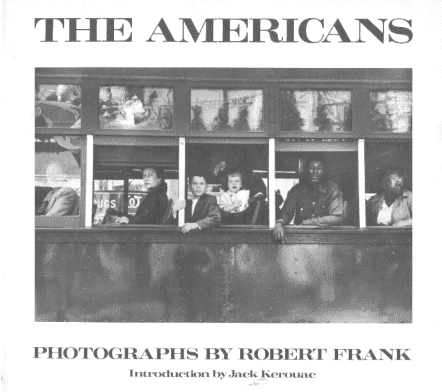
"That crazy feeling in America when the sun is hot on the streets and music comes out of the jukebox or from a nearby funeral, that's what Robert Frank has captured in the tremendous photographs taken as he traveled on the road around practically forty-eig ht states in an old used car (on Guggenhiem Fellowship) and with the agility, mystery, genuis, sadness, and strange secrecy of a shadow photographed scenes that have never been seen before on film." - Jack Kerouac, from his introduction to The Americans.
It was a good 4th of July. Our friend Laura drove over from Indiana, PA ("I'd come more often if we could move Ohio") with her miniature Daschund, Dash, and we went to the Indianapolis Museum of Art in the afternoon.
Laura is a fabric artist and interested in all related things; the museum had a display of a bunch of original Halston gowns, which were nice, but not my reason for wanting to go.
I wanted to see "the scroll."
Drawing on his notes and journals from his cross-country travels from 1947-50, Jack Kerouac wrote his first draft of On the Road over a three week period in April of 1951. Kerouac taped sheets of teletype paper together so they would run through his manual typewriter, enabling him to keep his flow of writing uninterrupted. The result was a 120-foot continuous “scroll” manuscript.
In May of 2001 Jim Irsay, owner of the Indianapolis Colts NFL team, paid $2.4 million dollars at auction for the original scroll. The purchase sparked some controversy in the Art World at the time and generated a very, very strange feature article in an August 2002 issue of The Chicago Tribune.
After a rocky start, Irsay has become a very responsible owner, first allowing the rare documents experts at Indiana University to take the fragile roll of paper and stabilize its condition, then sending the scroll, in effect, "on the road" across the US. The scroll began its official tour in Orlando in January 2004 and is scheduled to conclude at the end of 2009.
At the IMA the scroll is in a long glass case stretched out to a bit over half its length (for the second half of its stay it will be switched to reveal the last section). Off to the side of the gallery is a small room with a small desk and an old Underwood typewriter, the same vintage that Kerouac used, in which a scroll of paper has been inserted and visitors are invited to sit down and type whatever stream of consciousness words might come to mind. The keys of the typewriter are in dire need of some oil and stick together pretty much every time you type a letter which, I suspect, is intended to encourage brevity.
In 1959 Kerouac went on the Steve Allen television program and read a passage from his novel while Allen played a piano accompaniment. It is one of the many examples of why the 1950s were way, way hipper than we were lead to believe. I can't imagine what a comparable thing on network TV in 2008 could be.
Later, Kerouac wrote:
remembering that awful time only a year earlier when I had to rehearse my reading of prose a third time under the hot lights of the Steve Allen Show in the Burbank Studio, one hundred technicians waiting for me to start reading, Steve Allen watching me expectant as he plunks the piano, I sit there on the dunce's stool and refuse to read a word or open my mouth, "I don't have to REHEARSE for God's sake Steve!" - "But go ahead, we just wanta get the tone of your voice, just this last time, I'll let you off the dress rehearsal" and I sit there sweating not saying a word for a whole minute as everybody watches, finally I say "No I can't do it" and I go across the street and get drunk, but surprising everybody the night of the show by doing my job of reading just fine, which surprises the producers and so they take me out with a Hollywood starlet who turns out to be a big bore trying to read me her poetry and won't talk love because in Hollywood man, love is for sale.
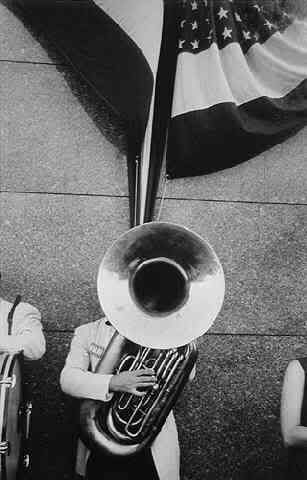
But the big surprise for me was the exhibit of eighty-two original Robert Frank photographs that are set up to surround the scroll. I think Franks images are to the American landscape what Henri Cartier-Bresson's are to the streets of Paris. The photos on display all come from his collection, The Americans, described very well at a Yale website:
"In 1955, the Swiss photographer Robert Frank traveled throughout the United States by car and returned with a bleak portrait of what the American road had to offer. As Kerouac writes in his introduction, Frank's photographs had "sucked a sad, sweet, poem out of America," a sadness found in the forlorn looks of dime store waitresses, funeral attendees, and human faces rendered unrecognizable in the glare of jukeboxes. The slightly offset angles and the blurred focus of many of the photographs suggest the nervousness and dislocation of the people they capture. Frank dispels any romantic notions of the lingering pioneer spirit of America by presenting a landscape of people and places absent of hope and promise."
The third photograph above, the bell of the Sousaphone under the patriotic bunting, titled "Political Rally" violates most rules of photographic composition and presents a timeless image of the banality of the American political process. I don't like to play favorites, but it's the one to beat.
Between 1961 and 1963, the Supremes released eight singles, none of which charted within the Top 40 positions of the Billboard Hot 100. Jokingly referred to as the "no-hit Supremes" around Motown's Hitsville U.S.A. offices, the girls tried to make up for their lack of a hit by taking on any performing chore that was available at the studio, including doing hand claps and singing backup for Motown artists such as Marvin Gaye and The Temptations. During these early years, all three members took turns singing lead on various songs: Mary Wilson favoring the soft ballads; Florence Ballard favoring the soulful, hard-driving songs; and Diana Ross favoring the more mainstream pop songs. Most of their early material was written and produced by Berry Gordy or Smokey Robinson.
In December 1963, the Supremes song "When the Lovelight Starts Shining Through His Eyes", peaked at number 23 on the Billboard pop chart. "Lovelight" was the first of many Supremes songs written by the Motown songwriting and production team of Holland-Dozier-Holland. Also, in late 1963, Berry Gordy made Diane Ross, now going by Diana, the official lead singer of the group, because he felt her distinctive, nasal quality would help the group cross over to white audiences. Ballard and Wilson were periodically given solos on Supremes albums, and Ballard continued to sing her solo number, "People", in concert for the next two years.
In the spring of 1964, the Supremes recorded a single titled "Where Did Our Love Go". The song was originally intended by Holland-Dozier-Holland for The Marvelettes, who rejected it. In August 1964, while traveling as a part of Dick Clark's Caravan of Stars tour, "Where Did Our Love Go" reached number one on the US pop charts. It was also their first song to reach the UK pop charts, going to number three.
"Where Did Our Love Go" was followed by four more US number-one hits: "Baby Love" (also a number-one hit in the United Kingdom), "Come See About Me", "Stop! In the Name of Love" and "Back in My Arms Again." Between late 1966 and early 1967, the Supremes charted four more number-one hits in a row: "You Can't Hurry Love", "You Keep Me Hangin' On", "Love Is Here and Now You're Gone", and "The Happening."*
The rise of The Supremes coincided with the arrival of the British Invasion and, for a brief moment that felt like it lasted forever - like most brief moments do when you live through them - the Top 40 charts (which we studied like clerics poring over scriptures) were weekly battles between The Beatles and The Supremes.
My memory of the Summer of 1965 was of an ongoing battle between the boys and the girls at the local public swimming pool over the juke box and the back and forth of "Can't Buy Me Love" "Baby Love" "Help!" "You Can't Hurry Love" created the most perfect soundtrack imaginable.
To this day, "She Loves You" and "Baby Love" hold the top 2 positions in my own personal "Best Songs of the Sixties" list.
In 1964 The Supremes released the LP, A Bit Of Liverpool, a collection of British Invasion covers of songs by The Beatles, Gerry & The Pacemakers, The Dave Clark Five and The Animals. It's fun to hear Lennon & McCartney channeled through Motown.
There are, of course, arguments made now with the benefit of four decades of hindsight that understand the success of The Supremes in terms of "market forces making black music more palatable to white audiences," which is proof that arguments can be both accurate and utterly beside the point at the very same time.
"Baby Love", like The Beach Boys' "Surfer Girl" or Chad & Jeremy's "Summer Song" or The Happenings' "See You In September" these songs represent the very last moments of innocence in a culture that would never know that kind of innocence ever again.
* The first 4 paragraphs are taken from the Wikipedia Supremes entry.
This is the time of year for decisions to be issued by The Supreme Court of the United States. First things first, as this happens notice if you will the number of 5 to 4 decisions. And, as you look at those remember how important it is to elect Barack Obama in November.
OK.
In today's ruling the court struck down in a 5-4 decision a Louisiana law that had authorized the death penalty for anyone who rapes a child under the age of 12. Of 3,300 inmates on death row across the country, only two face capital punishment for a crime other than murder. Both were convicted under Louisiana's law, the broadest in the land. There has not been an execution for rape in the United States since 1964.
I have mixed feelings about many things. The novels of William Faulkner, all the records released by Bob Dylan between 1981 and 1997, Barry Bonds, Mexican beers, how many speeds a bicycle really needs, and so on.
I do not have mixed feelings about the death penalty. There are people in the world I'd gladly see leave it with no trace of remorse. When people ask "Who gets to make that decision?" my answer is "We do."
But, while I have no problem with the idea of putting some people down like we do with vicious dogs, I am opposed to the death penalty in practice.
In order to support capital punishment you have to be OK with the idea that we will occasionally execute the wrong person. I'm not. It's that simple.
But I digress.
Today's decision dealt with the execution of child rapists. Again, I have no moral qualms with the idea in theory. Want to make the world a better place? Take a child rapist.... zzzzap! There. One better.
So I understand Justice Alito's argument in his dissent in which he denounced the court's "sweeping conclusion'' that the death penalty is inappropriate "no matter how young the child, no matter how many times the child is raped, no matter how many children the perpetrator rapes, no matter how sadistic the crime, no matter how much physical or psychological trauma is inflicted and no matter how heinous the perpetrator's criminal record may be.''
I am, however, troubled that four of the Justices apparently went through law school without the notion of the "slippery slope" coming up, even once. It would not bother me if you killed the child rapist, nor would it bother me if you killed the child abuser. If someone beats and tortures a child but neglects to rape him or her, is that somehow "better"? Why does the monster who rapes the 11 year old get the needle while the one who rapes the 12 year old get to check out books from the prison library? What about people who torture animals? How about a show of hands from all of us who would miss Michael Vick even if we noticed he was gone.
Not only does the idea of the slippery slope inform the majority opinion, but I have to think it is somehow also informed by the arguments presented to the Michigan legislature by the National Organization of Women when they petitioned to have the penalties for rape decreased.
You read that right. N.O.W. asked the Michigan legislature to reduce the penalty for rape.
Too often the crime of rape is reduced to one person's word against another's. Obviously this isn't true for children where the court accepts that a 9 year old cannot consent to sex. But when the accuser and defendant are adults, it's a different matter.
What N.O.W. saw was that the states that had the most draconian penalties for rape also had the lowest conviction rates. In Michigan, where rape was a capital crime, juries were as hesitant to convict a defendant in rape cases as they were in murder cases and rape cases rarely had the same kinds of evidence required to remove reasonable doubt.
In other words, all rapists, including those who target children, are more likely to be convicted and sentenced to lengthy prison terms when the death penalty is off the table.
That four of the nine people who sit on the nation's highest court couldn't see that is just one more piece of evidence in accessing damage that eight years of Republican rule has done to America.
When someone asks you, A penny for your thoughts, and you put your two cents in, what happens to the other penny?
When someone is impatient and says, "I haven't got all day," I always wonder, how can that be? How can you not have all day?
If a pig loses its voice, is it disgruntled?
It's never just a game when you're winning.
When you're born you get a ticket to the freak show. When you're born in America, you get a front row seat.
"What if there were no hypothetical questions?"
Frisbeetarianism is the belief that when you die, your soul goes up on the roof and gets stuck.
Some national parks have long waiting lists for camping reservations. When you have to wait a year to sleep next to a tree, something is wrong.
Give a man a fish and he will eat for a day. Teach him how to fish, and he will sit in a boat and drink beer all day.
Before they invented drawing boards, what did they go back to?
Procrastination is the art of keeping up with yesterday.
"May the forces of evil become confused on the way to your house."
Have you ever noticed that anybody driving slower than you is an idiot, and anyone going faster than you is a maniac?
If the #2 pencil is the most popular, why is it still #2?
I think it would be interesting if old people got anti-Alzheimer's disease where they slowly began to recover other people's lost memories.
Electricity is really just organized lightning.
Women like silent men, they think they're listening.
"Honesty may be the best policy, but it's important to remember that apparently, by elimination, dishonesty is the second-best policy."
I recently went to a new doctor and noticed he was located in something called the Professional Building. I felt better right away.
Why is the man (or woman) who invests all your money called a broker?
Men are from Earth, women are from Earth. Deal with it.
If all the world is a stage, where is the audience sitting?
Well, if crime fighters fight crime and fire fighters fight fire, what do freedom fighters fight? They never mention that part to us, do they?
"The very existence of flame-throwers proves that some time, somewhere, someone said to themselves, You know, I want to set those people over there on fire, but I'm just not close enough to get the job done."
Death is caused by swallowing small amounts of saliva over a long period of time.
I'm completely in favor of the separation of Church and State. My idea is that these two institutions screw us up enough on their own, so both of them together is certain death.
There's no present. There's only the immediate future and the recent past.
At a formal dinner party, the person nearest death should always be seated closest to the bathroom.
As a matter of principle, I never attend the first annual anything.
"By and large, language is a tool for concealing the truth."
Don't sweat the petty things and don't pet the sweaty things.
I think people should be allowed to do anything they want. We haven't tried that for a while. Maybe this time it'll work.
Think of how stupid the average person is, and realize half of them are stupider than that.
The only good thing ever to come out of religion was the music.Religion convinced the world that there's an invisible man in the sky who watches everything you do. And there's 10 things he doesn't want you to do or else you'll go to a burning place with a lake of fire until the end of eternity. But he loves you! ...And he needs money! He's all powerful, but he can't handle money!
Atheism is a non-prophet organization.
"Just cause you got the monkey off your back doesn't mean the circus has left town."
One can never know for sure what a deserted area looks like.
One tequila, two tequila, three tequila, floor.
If it's true that our species is alone in the universe, then I'd have to say the universe aimed rather low and settled for very little.
I'm always relieved when someone is delivering a eulogy and I realize I'm listening to it.
If you can't beat them, arrange to have them beaten.
"The main reason Santa is so jolly is because he knows where all the bad girls live."
There are nights when the wolves are silent and only the moon howls.
When you step on the brakes your life is in your foot's hands.
What does it mean to pre-board? Do you get on before you get on?
You know an odd feeling? Sitting on the toilet eating a chocolate candy bar.
You know the good part about all those executions in Texas? Fewer Texans.
Jerry Siegel and Joe Shuster saw their creation, Superman, launched in Action Comics #1 in April 1938 (cover-dated June). Siegel and Shuster had tried for years to find a publisher for their Superman character (originally conceived as a newspaper strip) without success.
This may be because Superman was originally a bald madman created by Siegel and Shuster who used his telepathic abilities to wreak havoc on mankind (see below).
Then Siegel thought, "What if this Superman was a force for good instead of evil?"
"What if" indeed.
The story of Superman is introduced in the first story in the comic book. In those 13 pages Superman breaks into the governor's mansion, fights his way through the governor's security and yanks the sleeping governor out of bed in order to stops an execution. Then he shows up at the scene of domestic violence and thumps the bejeezus out of a "wife-beater." Finally, Superman uncovers a plot between a corrupt politician and a corporate CEO to steal millions of tax dollars and brings them both to justice.
What I am fascinated by is a reocurring theme in the pop culture of the period in which the rich and powerful are always cast as villains, not to be trusted, out to screw working people, greedy characters we need to keep our eyes on (and our hands on our wallets).
1938 is also the year George Cukor directed the film Holiday with Cary Grant and Katherine Hepburn. It is an amazing film that, if you haven't seen, you need to track down the DVD and watch. In it, Grant plays the free-thinking Johnny Case who meets a woman on holiday, falls in love, gets engaged and then discovers she is the daughter of one of the wealthiest men in America. The scene in which he finds out when he goes to her house is wonderful; the house is the size of most art museums.
While suspicious of his motives at first, the wealthy father is won over by Grant's ability to put a deal together that will make him a small fortune in the stock market. But the father, and his older daughter to whom Grant is engaged, are horrified to learn that Grant intends to take this money and drop out of the very world into which the money has paid his entry fee. His intent is to retire to a modest life in the country, read Thoreau and "find himself."
Grant's fiancé is played by Doris Nolan and she undergoes a subtle but very noticeable transformation during the film from a young and alive, energetic and beautiful girl at the start, to a shrew-like and almost ugly woman as she is drawn to her father and a life of money and mansions. Katherine Hepburn plays the younger daughter who, of course, believes in Johnny's idealism and who ends up with him in the end.
"You've got no faith in Johnny, have you, Julia? His little dream may fall flat, you think. Well, so it may, what if it should? There'll be another. Oh, I've got all the faith in the world in Johnny. Whatever he does is all right with me. If he wants to dream for a while, he can dream for a while, and if he wants to come back and sell peanuts, oh, how I'll believe in those peanuts!"
But I digress.
It is, I believe, the Cold War, more than even the Civil War or Vietnam that did the greatest damage to America. Before WWII and the arrival of the mother-of-all-boogie-men-Communism, the popular media shows a landscape the oft deferred to Founders may well have recognized. A popular culture suspicious of the upper classes and the wealthy. A culture driven by labor, suspicious of the motives of management.
Another film that pops into my head as I struggle to articulate the cultural shifts between roughly 1940-1950 is Stanley Kramer's Judgment at Nuremberg (1961).
Judgment at Nuremberg is as stunning a critique of Cold War America as it can be read now as an equally insightful critique of the "War on Terror" (either that, or I've just come to a place where everything seems to work as a critique of the Bush administration). It seems to resonate perfectly with Mark Twain's observation that history "may not repeat itself, but it rhymes."
Socialism is an economic system in which wealth is distributed among all tiers of a society. There was a British mini-series a few years back in which a Socialist Party candidate was elected Prime Minister. Asked if he would do away with first class on the rail service he replied, "No! I intend to do away with second class."
I would vote for him on the basis of that remark alone.
In a NY Times article, Texas Governor, Rick Perry described Barack Obama as "one step away from being a socialist." The only way I've found to make sense of this is to argue that, if a socialist would be in favor of nationalizing the oil companies, then Obama, who is not in favor of nationalizing the oil companies is "one step away from being a socialist."
I wonder if they test the drinking water in Texas for thalidomide.
One conservative friend referred to Obama as a "socialist" once and I explained that it wasn't possible because I'm a socialist and I've never seen Obama at any of the meetings. To this day, and to his chagrin, "socialist" has become a generic term for anything he doesn't like. That Adam Sandler movie is socialist. So is that Coldplay song.
In my wallet I still carry, folded up in the corner, a $5 bill from 1950. At the end of my academic career I was teaching multiple sections of Public Speaking and every section had a student who would argue that prayer should be allowed in public school "because it says In God We Trust on our money."
"Really Heather? Tell you what, I'll give you a passing grade on that speech if you can find In God We Trust anywhere on this five."
If Communism is a rejection of private property, then the single greatest harm the Cold War caused was to transform the super rich into super patriots solely on the basis of their wealth.
Never again would it be natural to be suspicious of the intentions of the rich. From here on they would become our role models, who we aspired to be, who we dreamed our children might become.
Stan Denski, passed away on May 20, 2025 and lived in Indianapolis, IN, with his wife of 44 years. He plays acoustic and electric 6 & 12-string guitars in various odd tunings (try CGCGCF) and has released four albums under the names Many Bright Things and In The Summer Of The Mushroom Honey and has produced and written liner notes for over 30 others, including all ten volumes of the Love, Peace & Poetry series. As a scholar he has published numerous journal articles, book chapters, and one book. He is comfortable in his own skin and very much happy in his neighborhood and in his life.
On the reason for blogging...
"It does me good to write a letter which is not a response to a demand, a gratuitous letter, so to speak, which has accumulated in me like the waters of a reservoir." - Henry Miller
I live my life in growing orbits which move out over the things of the world perhaps I can never achieve the last but that will be my attempt. I am circling around God, around the ancient tower, and I have been circling for a thousand years and I still don't know if I am a falcon, or a storm, or a great song. ~Rainer Maria Rilke
“The current political situation is very muddled. People tend to confuse the quest for freedom with the embrace of capitalism. It seems doubtful that the joys of capitalism are enough to liberate a people. The bloody failure of socialism is on everybody’s lips, but no one sees capitalist globalization as a failure, in spite of the bloody inequalities that condition the market, and the populations who are excluded from it. The American Revolution failed long before the Soviet Revolution. Revolutionary situations and experiments are engendered by capitalism itself and show no signs of disappearing, unfortunately. Philosophy remains tied to a revolutionary becoming that has nothing to do with the history of revolutions.” - Gilles Deleuze “Two Regimes of Madness”, pg 379
"The point isn't the guitars, or jazz, or even music, but feeling more alive, more capable of compassion, more dedicated to beauty where it lives and love where it needs to go. " - Gary Keenan
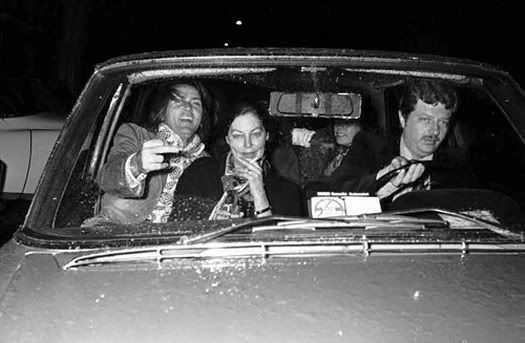 Martin Sheen and Ava Gardner
 Leonard Bernstein and Glenn Gould
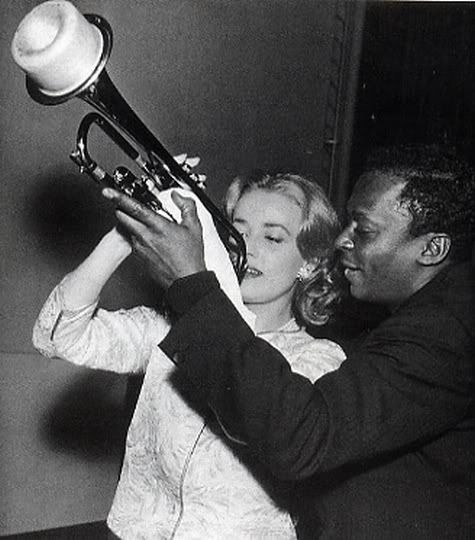 Miles Davis and Jeanne Moreau
 Jean-Paul Sartre and Simone de Beauvoir
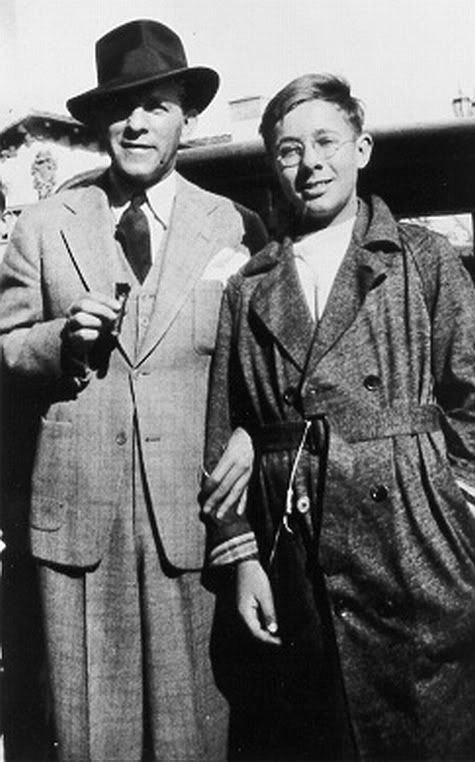 George Burns and Ray Bradbury
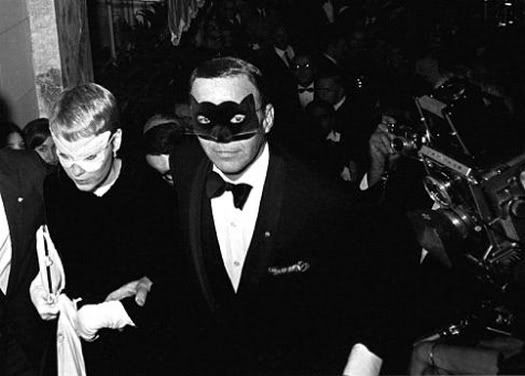 Mia Farrow and Frank Sinatra
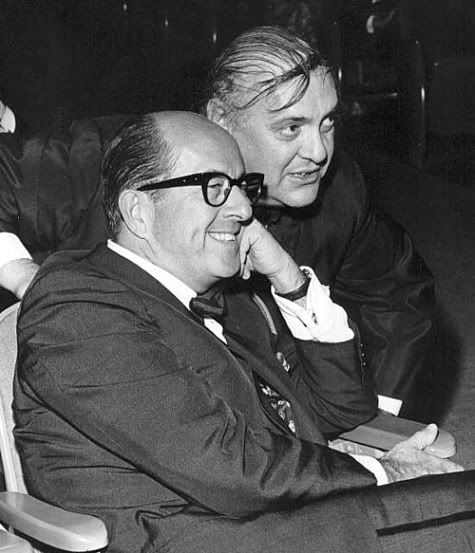 Phil Silvers and Zero Mostel
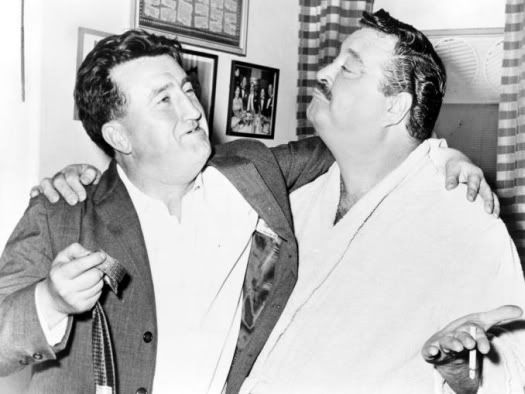 Brendan Behan and Jackie Gleason
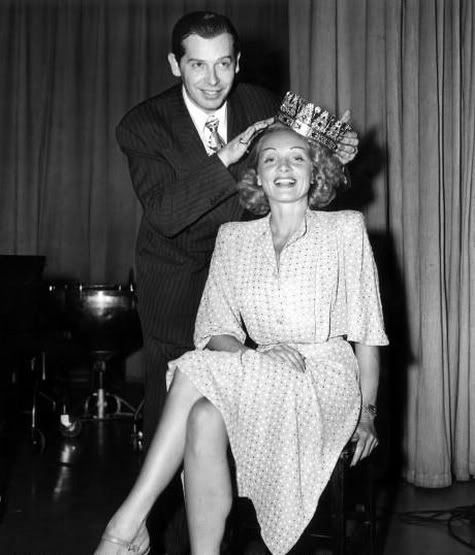 Milton Berle and Marlene Dietrich