Wednesday, May 21, 2008

Translations of the Hanging....

Addis Abeba, Ethiopia. Hanging on the market square.

"Desolation Row" is the 11:21 song that closes Bob Dylan's 1965 album Highway 61 Revisited and is often found in the top three or four of most of the countless lists of "Bob Dylan's best songs."

1965 was a hell of a year for Dylan. Famously "going electric" at the Newport Folk Festival, Dylan released the first two albums that would comprise, along with Blonde On Blonde released in 1966, what some fans refer to as the 1965-1966 trilogy; three electric albums that changed the face of pop music and songwriting.

"Desolation Row" falls at exactly halfway through that trilogy. On the preceding album, Bringing It All Back Home, a parallel can be drawn between "Desolation Row" and "The Gates of Eden." In the the lines that end “the gates of Eden” the choice is between the things “inside” and “outside.” In "Desolation Row,” things are either sent "from" or "to."

By the time Highway 61 Revisited has run its course, what I have always imagined as the foreboding wrought iron gates of Eden are transformed into the run-down funky neighborhood of “Desolation Row.” Creatively, it’s a move that suggests an Old Testament story rewritten as a John Steinbeck novel.

Dylan's influences in "Desolation Row" are multiple and include a nod to Steinbeck's Cannery Row, a place where the outcasts of society found a home. The title also references Jack Kerouac's novel Desolation Angels (Kerouac spent the summer of 1956 as a fire lookout on Desolation Peak, and wrote The Dharma Bums and Desolation Angels from his experiences on the peak). Al Kooper, who played organ and piano on the album, claimed in his autobiography that "Desolation Row" was Eighth Avenue in New York City. At the time, this was a very dangerous part of town. It is likely that Dylan's experiences in Greenwich Village had a powerful influence on him and his writing.

There is also a strong suggestion that the image and content of "Desolation Row" was influenced by the nearby town of Duluth, Minnesota, located at the northern end of Highway 61. The opening lines of the song, "They're selling postcards of the hanging... The circus is in town", seem drawn from the Duluth lynchings, which occurred in Duluth in June of 1920 and from which actual (and very gruesome) postcards were made and sold at the time.

Lastly, T. S. Eliot's The Waste Land also appears to have influenced "Desolation Row." T. S. Eliot had died earlier in 1965.
But I digress....

On the Dylan forum, Expecting Rain, a couple posters played with translations of "Desolation Row." A Russian-born Dylan fan, living in Germany, translated the song into Russian, paying attention to the poetic structure and character of the lyric. Later, another poster named Pinhedz, a musician from Minnesota, translated the Russian back into English, but intentionally doing a very literal translation.

I love the results. It says something about language and the nature of translation as well as something about Dylan and what those "somethings" are, I haven't a clue. But it is fun.

Они торгуют всем на свете
И красят стены в чёрный цвет.
Сегодня в цирке представленье,
Но на него билетов нет.

Everything in the world is for sale,
And they’re painting the walls black,
The circus has a show today,
But there are no tickets to it.

Ведут слепого коммиссара,
Похоже он учуял след.
Одна рука торчит в кармане,
Другая держит пистолет.

They’re leading the blind commissar,
It looks like he’s sniffing the trail,
One hand is in his pocket,
The other is holding his pistol.

А толпа опять бушует,
Её сегодня тянет вдаль,
Пока Леди и я глядим в окно
На улицу Печаль.

And the crowd is restless again,
Today the far beyond beckons to them,
While Lady and I look through the window
Onto the Street of Sadness.

Золушка спокойно,
С улыбкой скажет: "Не беда.
Пройти всем в жизни надо
Через отчаянья года".

Cinderella calmly
With a smile says “No problem.
You must experience everything in life
Through the reckless years.”

Тут вдруг врывается Ромео.
"Ты же моя!", он в плач и в крик.
Ему ответит кто-то тихо:
"Ты не туда попал, старик".

Then suddenly Romeo bursts in,
“You are mine!” with a cry and a scream.
Someone quietly answers him:
“You’re in the wrong place, old man.”

А потом сирены стихнут
И только Золушка одна
Метёт обрывки старых писем
На улице Вина.

And then the sirens fall silent,
And just Cinderella all alone,
Sweeps up scraps of old letters
On the street of guilt.

Сейчас луны почти не видно
И звёзды спрятались давно.
Даже старая гадалка
Закрыла наглухо окно.

Now the moon is almost not visible
And the stars were hidden long ago.
Even the old fortune teller
Has closed her window tight
.

Все, кроме Каина и Брата
И попрошайки с Пляс де Вож,
Все занимаются любовью
Иль просто ожидают дождь.

Everyone but Cain and his brother
And the beggar of the Place des Vosges,
Are all making love
Or just expecting rain.

А Филантроп принарядился,
Набил бумагою карман.
Он - главный гость на карнавале
На улице Обман.

But the philanthropist is all dressed up,
And stuffed his pocket with paper.
He’s the main guest at the carnival
On the Street of Deceit.


Вот Офелья, за неё мне страшно.
В её сердце - пустота.
Как скоро её cломала
Повседневная суета.

There’s Ophelia, I’m so afraid for her,
In her heart is emptiness.
So soon she was beaten down
By the cares of everyday life.

Смерть ей кажется прекрасной,
Hа груди - бронежилет.
Она стала старой девой
В свои юные двадцать лет.

Death seems wonderful to her,
She wears an armor breastplate
She’s turned into an old maid
At the tender age of 20 years.


И хотя во снах рисует
Цвета радуги вновь и вновь,
Из засады швыряет камни
На улицу Любовь.

Although in dreams she paints
The colors of the rainbow over and over,
From her ambush she throws stones
Into the Street of Love.


Эйнштейн в костюме Робин Гуда
Проходил недавно тут.
Вслед чемодан воспоминаний
Тянул его товарищ Шут.

Einstein disguised as Robin Hood
Passed here not long ago.
After him his suitcase of memories
Was pulled by his comrade Clown.


Швырнул так зло он сигарету,
Как будто это - динамит,
Потом пошёл, шатаясь, дальше,
Читая громко алфавит.

He flung his cigarette so wickedly,
As if it was dynamite,
Then he passed on, staggering,
Loudly reciting the alphabet.


Быть может, ты его не помнишь,
Он был когда-то виртуоз
Игры на электронной скрипке
На переулке Грёз.

Maybe you don’t remember him,
He was once a virtuoso
Playing the electric violin
In the Alley of Visions.


Доктор Фильц содержит судьбы
На дне огромных сундуков,
Каждый его подопечный
Ищет ключи от замков.

Doctor Filtz holds our destinies
In the bottom of huge trunks.
Every one he watches over
Is seeking the keys to the locks.


Mедсестра, та что в ответе
За цианкалий и за грог,
Ведёт ночами картотеку
С названием "Храни их, Бог".

The nurse that is in charge
Of the potassium cyanide and grog,
Carries the file of cards
Inscribed “God protect them.”


Они оба играют на дудках,
Ты услышишь их чудный дуэт,
Если высунешь ухо подальше
Из окна на улице Бред.

They both play on fifes,
You hear their wondrous duet,
If you stick your ear out the window
To the Street of Delerium.

Напротив шторы закрыты,
Там ужин готовят наспех,
Казанову кормят надеждой
На скорый у женщин успех.

On the other side the shades are drawn
They’re hurredly preparing dinner there.
They are feeding Casanova the hope
Of easy success with women.


Они в нём воспитают
Непомерную гордость собой,
А назавтра удачей отравят,
Смешав сладкий яд с похвалой.

In him they are nurturing
Boundless pride in himself,
But tomorrow they’ll poison him with success,
Having mixed sweet poison with praise.

А Фантом кричит в катакомбах:
"Казанове урок будет пусть,
Как ходить вечерами украдкой
На улицу Вечная Грусть".

And the phantom shouts in the catacombs:
“Let Casanova learn his lesson
For secretly going in the evenings
To the Street of Eternal Sorrow.”


Ровно в полночь все агенты
Из спецотряда сверхлюдей
Стучатся в двери тех, кто полон
Различных мыслей и идей.

At the stroke of midnight all the agents
From the supermen’s special brigade
Knock on the doors of those who are full
Of various thoughts and ideas.


Потом они везут их в замок,
Где подключают аппарат
Сердечных приступов к груди им:
Никто не будет виноват.

Then they take them to the castle
Where they hook up to their chests
The heart-attack machine:
No one will guilty.


Команда страховых агентов
Стоит с канистрами в руках.
Их цель: Предотвращать побеги
На улицу Забытый страх.

A crew of insurance agents
Stand with canisters in their hands.
Their job is to prevent escapes
To the Street of Forgotten Fear.


Слава Нептуну Нерона!
"Титаник" плывёт по волне,
Hа палубе все ещё спорят,
Кто был на чьей стороне.

Praise to Nero’s Neptune!
The Titanic sails over the waves,
On the deck everyone still argues,
Who was on who’s side.


Taм Эзра Паунд и Ти Эс Эльотт
Ведут на мостиke дуэль,
Над ними смеётся Калипсо
Под нежную песнь Ариэль.

There Ezra Pound and TS Elliott
Are fighting a duel on the bridge,
Calypso is laughing over them
Under the tender song of Ariel.


Ведь только там, в глубинах моря,
Где благодать и красота,
Нет смысла думать слишком много
Об улице Dreams.

It’s only there, in the depths of the sea
Where there is abundance and beauty,
There is no reason to think to much
About the Street of Dreams.

Я получил твоё письмо,
Получил ещё вчера.
Ты удачно пошутил,
Спросив, как мои дела.

I received your letter,
I got it already yesterday.
You made a good joke,
Asking how I was doing.

Всех, о ком ты пишешь мне,
Я знаю их, их жизнь скучна,
Я изменил их лица,
Дал им другие имена.

Everyone that you wrote me about,
I know them, I’m tired of their lives,
I changed all their faces
And gave them different names.


Теперь я не могу читать,
Не пиши же мне, пока
Не переедешь, как и я,
На улицу Тоска.

Right now I can’t read,
Don’t write to me until
You cross over, like me,
To the Street of Grief.


The original english lyrics, if you don't know them already by heart, can be found here.

Thursday, May 15, 2008

Zbigniew Herbert

A Description of the King

The king's beard on which sauces and ovations
fell until it became heavy as an axe
appears suddenly in a dream to a man condemned to die
and on a candlestick of flesh shines alone in the dark.

One hand for tearing meat is huge as a whole province
through which a ploughman inches forward a corvette lingers
The hand wielding the sceptre has withered from distinction
has grown grey from old age like an ancient coin

In the hour-glass of the heart sand trickles lazily
Feet taken off with boots stand in a corner
on guard when at night stiffening on the throne
the king heirlessly forfeits his third dimension


"His poems, even in English, seem to me finer than anything currently being written by any English or American poet." - A. Alvarez, The New York Review of Books, 18/7/1985

"If the key to contemporary Polish poetry is the selective experience of the last decades, Herbert is perhaps the most skillful in expressing it and can be called a poet of historical irony. He achieves a sort of precarious equilibrium by endowing the patterns of civilization with meanings, in spite of all its horrors." - Czeslaw Milosz, Postwar Polish Poetry (3rd ed., 1983)

Polish poet and essayist Zbigniew Herbert (1924-1988) easily stands beside Nobel Prize laureates Milosz and Szymborska, part of a remarkable literary tradition. Very much an Eastern European writer, his work is also of interest beyond that particular region (and those particular times).


A Ballad About Us Not Ceasing To Exist

Those who sailed out at dawn

but will never come back
they left their trace on the surface --

at such times into the deep of sea falls a shell
beautiful as a mouth turned to stone

those who walked the sandy trail
but did not make it to the shutters
although the roofs were already in sight
within a bell of air they have shelter


and those who orphaned only
a cold room a few books
an empty inkwell blank sheets --

indeed those did not die completely

their whisper wafts through thickets of wallpaper
in the ceiling a flat head lives on
of air water lime earth
a paradise was fixed for them their angel of wind
crumbles the body in hand
they will carry upon the meadows of this here earth


Herbert's anti-hero Mr.Cogito, subject of many of his poems, is one of the more inspired characters in modern literature, an ideal vehicle for Herbert's talents.


Mr. Cogito's Legs

the left leg is quite normal
one might even say optimistic
a little short perhaps
boyish
fleshy smiles
with a finely fashioned calf
the right one

pitiful
skinny
with two scars
one along the achilles tendon
the other ovate
pale pink
ignominious souvenir of an escape

the left one
inclined to leaps
dancing
loving life too much
to risk it

the right one
nobly stiff
mocking danger

here he comes
on both legs
the left one like Sancho Panza
and the right
resembling the adventurous knight
Mr. Cogito
walks
through the world
limping a little


Herbert's fascination with other subjects -- painting, for example, or other things Dutch -- served his poetry well, and also made for interesting subjects.


Daedalus and Icarus

Daedalus says:

Go on sonny but remember that you are walking and not flying
the wings are just an ornament and you are stepping on a meadow
that warm gust is just the humid earth of summer
and that cold one is a brook
the sky is full of leaves and small animals


Icarus says:

The eyes like two stones return straight to earth
and see a farmer who knocks as
under oily till
a grub which wiggles in a furrow
bad grub which cuts the bond of a plant with the earth


Daedalus says:

Sonny this is not true The Cosmos is merely light
and earth is a bowl of shadows Look as here colors play
dust rises from above the sea smoke rises to the sky
of noblest atoms a rainbow sets itself now


Icarus says:

Arms hurt father from this beating at vacuum
legs are getting numb and miss thorns and sharp stones
I cannot keep looking at the sun as you do father
I sunken whole in the dark rays of the earth


Description of the catastrophe:

Now Icarus falls down head first
the last frame of him is a glimpse of a heal childlike small
being swallowed by the devouring sea
Up above the father cries out the name
which no longer belongs to a neck or a head
but only to a remembrance


Commentary:

He was so young did not understand that wings are just a metaphor
a bit of wax and feathers and a contempt for the laws of gravitation
I cannot hold a body at an elevation of a great many feet
The essence of the matter is in having our hearts
which are coursed by heavy blood
fill with air
and this very thing Icarus did not want to accept

let us pray

Sunday, May 4, 2008

In a Silent Way

This is the last in a quartet of obituaries - a psychedelic record collector, an accordion player, the father of LSD, and the greatest record producer who ever walked the Earth.

Let me tell you about Teo Macero.

I have a friend who, like me, collects records from the 1960s. But she doesn't glamorize the decade and is always quick to point out that, for most of the things that the 1960s are touted for, it was really the 1950s when things started getting serious.

Attilio Joseph Macero was born and raised in Glens Falls, New York. After serving in the United States Navy, he moved to New York City in 1948 to attend the Juilliard School of Music. He studied composition, and graduated from Juilliard in 1953 with Bachelor's and Master's degrees.

In 1953, Macero co-founded Charles Mingus' Jazz Composers Workshop, and became a major contributor to the New York City avant-garde jazz scene. As a composer, Macero wrote in an atonal style, as well as in Third Stream, a synthesis of jazz and classical music. He performed live, and recorded several albums with Mingus and the other Workshop members over the next three years, including Jazzical Moods (in 1954) and Jazz Composers Workshop (in 1955).

During this time, Macero also recorded Explorations. While he had contributed compositions to other albums, this was the first full album of his own compositions, and Macero's first album as a leader. The 1958 short experimental film Bridges-Go-Round by filmmaker Shirley Clarke featured two alternative soundtracks, one by Louis and Bebe Barron and one by Macero.

Macero found greater fame as a producer for Columbia Records. He joined Columbia in 1957, and produced hundreds of records while at the label. Macero worked with dozens of artists at Columbia including Mingus, Duke Ellington, Ella Fitzgerald, Thelonious Monk, Johnny Mathis, Count Basie, Dave Brubeck, Tony Bennett, Charlie Byrd, and Stan Getz. He was also responsible for signing Mingus, Monk, and Byrd to Columbia.

Macero produced the seminal Dave Brubeck Quartet album Time Out, and Thelonious Monk's first Columbia recording, Monk's Dream, as well as Underground. He also produced Mingus' first Columbia album, Mingus Ah Um. Beyond jazz, he produced a number of Broadway original cast recordings including A Chorus Line and Bye Bye Birdie. And he produced the soundtrack to The Graduate, by Simon and Garfunkel.

But all these accomplishments pale to the work Macero would do with Miles Davis.

Davis’s routine in the late 1960s was to record a lot of music in the studio with a band, much of it improvised and based on themes and even mere chords that he would introduce on the spot. Later Mr. Macero, with Davis’s help, would splice together vamps and bits and pieces of improvisation.

For example, Mr. Macero isolated a little melodic improvisation Davis played on the trumpet for “Shhh/Peaceful” on In a Silent Way and used it as the theme, placing it at the beginning and the end of the piece. Even live recordings he sometimes treated as drafts; the first track of Davis’s Live at Fillmore East, from 1970, contains a snippet pasted in from a different song.

Helping to build Miles Davis albums like Bitches Brew, In a Silent Way and Get Up With It, Macero used techniques partly inspired by composers like Edgard Varèse, who had been using tape-editing and electronic effects to help shape the music. Such techniques were then new to jazz and have largely remained separate from it since. But the electric-jazz albums he helped Davis create — especially Bitches Brew, which remains one of the best-selling albums by a jazz artist — have deeper echoes in almost 40 years of experimental pop, like work by Can, Brian Eno and Radiohead.

Macero strongly believed that the finished versions of Davis’s LPs, with all their intricate splices and sequencing — done on tape with a razor blade, in the days before digital editing — were the work of art, the entire point of the exercise. He opposed the current practice of releasing boxed sets that include all the material recorded in the studio, including alternate and unreleased takes. He was not involved in Columbia’s extensive reissuing of Davis’s work for the label, in lavish boxed sets from the mid-’90s until last year.

Teo Macero died in February in New York at the age of 82.

Saturday, May 3, 2008

The Bicycle Ride

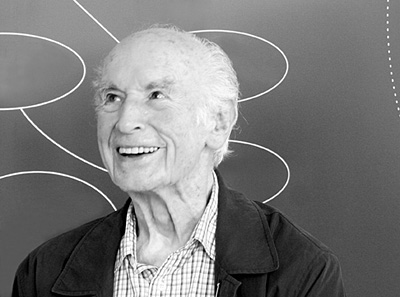
Albert Hofmann was born in Baden, Switzerland, on the elventh of January, 1906, and studied chemistry at the University of Zürich. His main interest was the chemistry of plants and animals, and he later conducted important research regarding the chemical structure of the common animal substance chitin, for which he received his doctorate.

Hofmann joined the pharmaceutical-chemical department of Sandoz Laboratories (now Novartis), located in Basel. He began studying the medicinal plant squill and the fungus ergot as part of a program to purify and synthesize active constituents for use as pharmaceuticals. Over the next few years, he worked his way through the lysergic acid derivatives, eventually synthesizing LSD-25 for the first time in 1938. After minimal testing, LSD-25 was set aside as he continued with other derivatives. Four years later, on April 16, 1943, he re-synthesized LSD-25 because he felt he might have missed something the first time around. That day, he became the first human to experience the effects of LSD after accidentally ingesting a minute amount.

Three days later, on April 19, 1943, he decided to verify his results by intentionally ingesting 250 ug of LSD. This day has become known as "Bicycle Day" as Hofmann experienced an incredible bicycle ride on his way home from the lab.

"Everything I saw was distorted as in a warped mirror," he said, describing his bicycle ride home. "I had the impression I was rooted to the spot. But my assistant told me we were actually going very fast."

Upon reaching home, Hofmann sat down on a divan and began experiencing what he called "wonderful visions."

"What I was thinking appeared in colors and in pictures," he told Swiss television network SF DRS for a program marking his 100th birthday two years ago.

For a time, Sandoz sold LSD 25 under the name Delysid, encouraging doctors to try it themselves. It was one of the strongest drugs in medicine — with just one gram enough to drug an estimated 10,000 to 20,000 people for 12 hours.

Hofmann discovered the drug had a similar chemical structure to psychedelic mushrooms and herbs used in religious ceremonies by Mexican Indians.

In addition to his discovery of LSD, he was also the first to synthesize psilocybin (the active constituent of 'magic mushrooms') in 1958. Albert Hofmann, known as the 'father of LSD', continued to work at Sandoz until 1971 when he retired as Director of Research for the Department of Natural Products. In his retirement, Hofmann served as a member of the Nobel Prize Committee. He continued to write, lecture, and play a leading role as an elder in the psychedelic community until his quick and relatively painless death from a heart attack at the age of 102.

"I think that in human evolution it has never been as necessary to have this substance LSD. It is just a tool to turn us into what we are supposed to be. ” — Albert Hofmann

Thursday, April 24, 2008

Eulogy for Danny

Below is the eulogy delivered by Bruce Springsteen at Danny Federici's funeral on April 21 in Red Bank, New Jersey.

FAREWELL TO DANNY

Let me start with the stories.

Back in the days of miracles, the frontier days when "Mad Dog" Lopez and his temper struck fear into the band, small club owners, innocent civilians and all women, children and small animals.

Back in the days when you could still sign your life away on the hood of a parked car in New York City.

Back shortly after a young red-headed accordionist struck gold on the Ted Mack Amateur Hour and he and his mama were sent to Switzerland to show them how it's really done.

Back before beach bums were featured on the cover of Time magazine.

I'm talking about back when the E Street Band was a communist organization! My pal, quiet, shy Dan Federici, was a one-man creator of some of the hairiest circumstances of our 40 year career... And that wasn't easy to do. He had "Mad Dog" Lopez to compete with.... Danny just outlasted him.

Maybe it was the "police riot" in Middletown, New Jersey. A show we were doing to raise bail money for "Mad Log" Lopez who was in jail in Richmond, Virginia, for having an altercation with police officers who we'd aggravated by playing too long. Danny allegedly knocked over our huge Marshall stacks on some of Middletown's finest who had rushed the stage because we broke the law by...playing too long.

As I stood there watching, several police officers crawled out from underneath the speaker cabinets and rushed away to seek medical attention. Another nice young officer stood in front of me onstage waving his nightstick, poking and calling me nasty names. I looked over to see Danny with a beefy police officer pulling on one arm while Flo Federici, his first wife, pulled on the other, assisting her man in resisting arrest.

A kid leapt from the audience onto the stage, momentarily distracting the beefy officer with the insults of the day. Forever thereafter, "Phantom" Dan Federici slipped into the crowd and disappeared.

A warrant out for his arrest and one month on the lam later, he still hadn't been brought to justice. We hid him in various places but now we had a problem. We had a show coming at Monmouth College. We needed the money and we had to do the gig. We tried a replacement but it didn't work out. So Danny, to all of our admiration, stepped up and said he'd risk his freedom, take the chance and play.

Show night. 2,000 screaming fans in the Monmouth College gym. We had it worked out so Danny would not appear onstage until the moment we started playing. We figured the police who were there to arrest him wouldn't do so onstage during the show and risk starting another riot.

Let me set the scene for you. Danny is hiding, hunkered down in the backseat of a car in the parking lot. At five minutes to eight, our scheduled start time, I go out to whisk him in. I tap on the window.

"Danny, come on, it's time."

I hear back, "I'm not going."

Me: "What do you mean you're not going?"

Danny: "The cops are on the roof of the gym. I've seen them and they're going to nail me the minute I step out of this car."

As I open the door, I realize that Danny has been smoking a little something and had grown rather paranoid. I said, "Dan, there are no cops on the roof."

He says, "Yes, I saw them, I tell you. I'm not coming in."

So I used a procedure I'd call on often over the next forty years in dealing with my old pal's concerns. I threatened him...and cajoled. Finally, out he came. Across the parking lot and into the gym we swept for a rapturous concert during which we laughed like thieves at our excellent dodge of the local cops.

At the end of the evening, during the last song, I pulled the entire crowd up onto the stage and Danny slipped into the audience and out the front door. Once again, "Phantom" Dan had made his exit. (I still get the occasional card from the old Chief of Police of Middletown wishing us well. Our histories are forever intertwined.) And that, my friends, was only the beginning.

There was the time Danny quit the band during a rough period at Max's Kansas City, explaining to me that he was leaving to fix televisions. I asked him to think about that and come back later.

Or Danny, in the band rental car, bouncing off several parked cars after a night of entertainment, smashing out the windshield with his head but saved from severe injury by the huge hard cowboy hat he bought in Texas on our last Western swing.

Or Danny, leaving a large marijuana plant on the front seat of his car in a tow away zone. The car was promptly towed. He said, "Bruce, I'm going to go down and report that it was stolen." I said, "I'm not sure that's a good idea."

Down he went and straight into the slammer without passing go.

Or Danny, the only member of the E Street Band to be physically thrown out of the Stone Pony. Considering all the money we made them, that wasn't easy to do.

Or Danny receiving and surviving a "cautionary assault" from an enraged but restrained "Big Man" Clarence Clemons while they were living together and Danny finally drove the "Big Man" over the big top.

Or Danny assisting me in removing my foot from his stereo speaker after being the only band member ever to drive me into a violent rage.

And through it all, Danny played his beautiful, soulful B3 organ for me and our love grew. And continued to grow. Life is funny like that. He was my homeboy, and great, and for that you make considerations... And he was much more tolerant of my failures than I was of his.

When Danny wasn't causing chaos, he was a sweet, talented, unassuming, unpretentious good-hearted guy who simply had an unchecked ability to make good fortune and things in general go fabulously wrong.

But beyond all of that, he also had a mountain of the right stuff. He had the heart and soul of an engineer. He learned to fly. He was always up on the latest technology and would explain it to you patiently and in enormous detail. He was always "souping" something up, his car, his stereo, his B3. When Patti joined the band, he was the most welcoming, thoughtful, kindest friend to the first woman entering our "boys club."

He loved his kids, always bragging about Jason, Harley, and Madison, and he loved his wife Maya for the new things she brought into his life.

And then there was his artistry. He was the most intuitive player I've ever seen. His style was slippery and fluid, drawn to the spaces the other musicians in the E Street Band left. He wasn't an assertive player, he was a complementary player. A true accompanist. He naturally supplied the glue that bound the band's sound together. In doing so, he created for himself a very specific style. When you hear Dan Federici, you don't hear a blanket of sound, you hear a riff, packed with energy, flying above everything else for a few moments and then gone back in the track. "Phantom" Dan Federici. Now you hear him, now you don't.

Offstage, Danny couldn't recite a lyric or a chord progression for one of my songs. Onstage, his ears opened up. He listened, he felt, he played, finding the perfect hole and placement for a chord or a flurry of notes. This style created a tremendous feeling of spontaneity in our ensemble playing.

In the studio, if I wanted to loosen up the track we were recording, I'd put Danny on it and not tell him what to play. I'd just set him loose. He brought with him the sound of the carnival, the amusements, the boardwalk, the beach, the geography of our youth and the heart and soul of the birthplace of the E Street Band.

Then we grew up. Very slowly. We stood together through a lot of trials and tribulations. Danny's response to a mistake onstage, hard times, catastrophic events was usually a shrug and a smile. Sort of an "I am but one man in a raging sea, but I'm still afloat. And we're all still here."

I watched Danny fight and conquer some tough addictions. I watched him struggle to put his life together and in the last decade when the band reunited, thrive on sitting in his seat behind that big B3, filled with life and, yes, a new maturity, passion for his job, his family and his home in the brother and sisterhood of our band.

Finally, I watched him fight his cancer without complaint and with great courage and spirit. When I asked him how things looked, he just said, "what are you going to do? I'm looking forward to tomorrow." Danny, the sunny side up fatalist. He never gave up right to the end.

A few weeks back we ended up onstage in Indianapolis for what would be the last time. Before we went on I asked him what he wanted to play and he said, "Sandy." He wanted to strap on the accordion and revisit the boardwalk of our youth during the summer nights when we'd walk along the boards with all the time in the world.


So what if we just smashed into three parked cars, it's a beautiful night! So what if we're on the lam from the entire Middletown police department, let's go take a swim! He wanted to play once more the song that is of course about the end of something wonderful and the beginning of something unknown and new.

Let's go back to the days of miracles. Pete Townshend said, "a rock and roll band is a crazy thing. You meet some people when you're a kid and unlike any other occupation in the whole world, you're stuck with them your whole life no matter who they are or what crazy things they do."

If we didn't play together, the E Street Band at this point would probably not know one another. We wouldn't be in this room together. But we do... We do play together. And every night at 8 p.m., we walk out on stage together and that, my friends, is a place where miracles occur...old and new miracles. And those you are with, in the presence of miracles, you never forget. Life does not separate you. Death does not separate you. Those you are with who create miracles for you, like Danny did for me every night, you are honored to be amongst.

Of course we all grow up and we know "it's only rock and roll"...but it's not. After a lifetime of watching a man perform his miracle for you, night after night, it feels an awful lot like love.

So today, making another one of his mysterious exits, we say farewell to Danny, "Phantom" Dan, Federici. Father, husband, my brother, my friend, my mystery, my thorn, my rose, my keyboard player, my miracle man and lifelong member in good standing of the house rockin', pants droppin', earth shockin', hard rockin', booty shakin', love makin', heart breakin', soul cryin'... and, yes, death defyin' legendary E Street Band.

Wednesday, April 23, 2008

Michael Piper


"Death is to me today
like the smell of myrrh,
like sitting under a sail on a windy day.

Death is to me today
like the smell of flowers,
like sitting on the shore of drunkeness."

- The dialogue of a man with his soul, c. 1850 BC

When the small business I'd started with two partners in 1994 finally closed in 2002 I had one completed album still unreleased. It had been designed as a "psychedelic super session" of sorts and had guest performances from musicians well known to fans of obscure psychedelia the world over. Its center piece was a twenty-two minute cover version of The Paul Butterfield Blues Band's ground-breaking 1966 composition "East West" which ran the length of side one.

The second side opened with an ethereal folk song called "The Silver Witch" written and performed by Alisha Sufit, the British artist who had fronted the band Magic Carpet in the early 1970s.

It closed with a long musical segment driven by a backwards lead electric guitar and multiple electric basses over which former Dead Kennedys lead singer, Jello Biafra, performed a spoken word piece about psychedelic record collecting called "I Am Not a Collector Potato."

It was a lovely record and it was finally released in 2005 by my friend Michael Piper who released it on CD on his Wild Places label and on a lovely limited gold vinyl edition on his Gates of Dawn label.

I'd known Michael since the early 1990s when we both published mail order rare record catalogs in the dark and mysterious times before the dawn on the internet. I'd met Michael a few times when he passed through Indiana and would stay with us. Through Michael I also met many people including Alisha Sufit who took me into her home in London on my first trip to England because Michael said I was OK.

I had not spoken to Michael since the release of the Many Bright Friends album. I imagined he'd show up some afternoon and we would reconnect they way we had in the past. That's not going to happen now as I learned just the other day that Michael died a few days ago in New York after a short illness. The news of Michael's passing spread through a number of internet music discussion forums where all the messages from his many friends and the many people whose lives he touched over the years can be distilled down to a post in a psychedelic music chat room that Michael's friend, Mike Ascherman left: He was one of the good guys.

Sunday, April 6, 2008

Visions of the Future: Life Beyond the Year 2000!


There's a very interesting blog written by a guy named "Matt" and called Paleo-Future: A Look Into the Future that Never Was.

A recent post featured a piece, in its entirety, originally run in the the July 19, 1965 Delta Democrat-Times (Greenville, MS) proclaiming that by the year 2000, "there will be a Negro president of the United States, a Negro on the Supreme Court, [and] one or more in the U.S. Senate."

I've always been fascinated by visions of the "future" because they highlight the problems of the present; nothing fills us with a more complete sense of our own inadequacies than the endless parade of old futures -- flying cars and undersea cities -- whose goals we have missed reaching by enormous amounts.

Perhaps the best vision of the future is the one John Prine describes in his song, "Living in the Future," the chorus of which is:

We're all living in the future / I'll tell you how I know
I read it in the paper / fifteen years ago
We're all flying rocket ships / and talking with our minds
And wearing turquoise jewelry / and standing in soup lines.

But I digress....

The November 1968 issue of Mechanix Illustrated contained an article looking ahead to what life will be like in 2008. "40 years in the Future" by James R. Berry:

"It's 8 a.m., Tuesday, Nov. 18, 2008, and you are headed for a business appointment 300 mi. away. You slide into your sleek, two-passenger air-cushion car, press a sequence of buttons and the national traffic computer notes your destination, figures out the current traffic situation and signals your car to slide out of the garage. Hands free, you sit back and begin to read the morning paper—which is flashed on a flat TV screen over the car’s dashboard. Tapping a button changes the page.

The car accelerates to 150 mph in the city’s suburbs, then hits 250 mph in less built-up areas, gliding over the smooth plastic road. You whizz past a string of cities, many of them covered by the new domes that keep them evenly climatized year round. Traffic is heavy, typically, but there’s no need to worry. The traffic computer, which feeds and receives signals to and from all cars in transit between cities, keeps vehicles at least 50 yds. apart. There hasn’t been an accident since the system was inaugurated. Suddenly your TV phone buzzes. A business associate wants a sketch of a new kind of impeller your firm is putting out for sports boats. You reach for your attache case and draw the diagram with a pencil-thin infrared flashlight on what looks like a TV screen lining the back of the case. The diagram is relayed to a similar screen in your associate’s office, 200 mi. away. He jabs a button and a fixed copy of the sketch rolls out of the device. He wishes you good luck at the coming meeting and signs off.

Ninety minutes after leaving your home, you slide beneath the dome of your destination city. Your car decelerates and heads for an outer-core office building where you’ll meet your colleagues. After you get out, the vehicle parks itself in a convenient municipal garage to await your return. Private cars are banned inside most city cores. Moving sidewalks and electrams carry the public from one location to another.

With the U.S. population having soared to 350 million, 2008 transportation is among the most important factors keeping the economy running smoothly. Giant transportation hubs called modemixers are located anywhere from 15 to 50 mi. outside all major urban centers. Tube trains, pushed through bores by compressed air, make the trip between modemixer and central city in 10 to 15 minutes.

A major feature of most modemixers is the launching pad from which 200-passenger rockets blast off for other continents. For less well-heeled travelers there are SST and hypersonic planes that carry 200 to 300 passengers at speeds up to 4,000 mph. Short trips— between cities less than 1,000 mi. apart—are handled by slower jumbo jets.

Homes in Mi’s 80th year are practically self-maintaining. Electrostatic precipitators clean the air and climatizers maintain the temperature and humidity at optimum levels. Robots are available to do housework and other simple chores. New materials for siding and interiors are self-cleaning and never peel, chip or crack.

Dwellings for the most part are assembled from prefabricated modules, which can be attached speedily in the configuration that best suits the homeowner. Once the foundation is laid, attaching the modules to make up a two- or three-bedroom house is a job that doesn’t take more than a day. Such modular homes easily can be expanded to accommodate a growing family. A typical wedding present for the 21st century newlyweds is a fully equipped bedroom, kitchen or living room module.

Other conveniences ease kitchenwork. The housewife simply determines in advance her menus for the week, then slips prepackaged meals into the freezer and lets the automatic food utility do the rest. At preset times, each meal slides into the microwave oven and is cooked or thawed. The meal then is served on disposable plastic plates. These plates, as well as knives, forks and spoons of the same material, are so inexpensive they can be discarded after use.

The single most important item in 2008 households is the computer. These electronic brains govern everything from meal preparation and waking up the household to assembling shopping lists and keeping track of the bank balance. Sensors in kitchen appliances, climatizing units, communicators, power supply and other household utilities warn the computer when the item is likely to fail. A repairman will show up even before any obvious breakdown occurs.

Computers also handle travel reservations, relay telephone messages, keep track of birthdays and anniversaries, compute taxes and even figure the monthly bills for electricity, water, telephone and other utilities. Not every family has its private computer. Many families reserve time on a city or regional computer to serve their needs. The machine tallies up its own services and submits a bill, just as it does with other utilities.

Money has all but disappeared. Employers deposit salary checks directly into their employees’ accounts. Credit cards are used for paying all bills. Each time you buy something, the card’s number is fed into the store’s computer station. A master computer then deducts the charge from your bank balance.

Computers not only keep track of money, they make spending it easier. TV-telephone shopping is common. To shop, you simply press the numbered code of a giant shopping center. You press another combination to zero in on the department and the merchandise in which you are interested. When you see what you want, you press a number that signifies “buy,” and the household computer takes over, places the order, notifies the store of the home address and subtracts the purchase price from your bank balance. Much of the family shopping is done this way. Instead of being jostled by crowds, shoppers electronically browse through the merchandise of any number of stores.

People have more time for leisure activities in the year 2008. The average work day is about four hours. But the extra time isn’t totally free. The pace of technological advance is such that a certain amount of a jobholder’s spare time is used in keeping up with the new developments—on the average, about two hours of home study a day.

Most of this study is in the form of programmed TV courses, which can be rented or borrowed from tape libraries. In fact most schooling—from first grade through college—consists of programmed TV courses or lectures via closed circuit. Students visit a campus once or twice a week for personal consultations or for lab work that has to be done on site. Progress of each student is followed by computer, which assigns end term marks on the basis of tests given throughout the term.

Besides school lessons, other educational material is available for TV viewing. You simply press a combination of buttons and the pages flash on your home screen. The world’s information is available to you almost instantaneously.

TV screens cover an entire wall in most homes and show most subjects other than straight text matter in color and three dimensions. In addition to programmed TV and the multiplicity of commercial fare, you can see top Broadway shows, hit movies and current nightclub acts for a nominal charge. Best-selling books are on TV tape and can be borrowed or rented from tape libraries.

A typical vacation in 2008 is to spend a week at an undersea resort, where your hotel room window looks out on a tropical underwater reef, a sunken ship or an ancient, excavated city. Available to guests are two- and three-person submarines in which you can cruise well-marked underwater trails.

Another vacation is a stay on a hotel satellite. The rocket ride to the satellite and back, plus the vistas of earth and moon, make a memorable vacation jaunt.

While city life in 2008 has changed greatly, the farm has altered even more. Farmers are business executives running operations as automated as factories. TV scanners monitor tractors and other equipment computer programmed to plow, harrow and harvest. Wires imbedded in the ground send control signals to the machines. Computers also keep track of yields, fertilization, soil composition and other factors influencing crops. At the beginning of each year, a print-out tells the farmer what to plant where, how much to fertilize and how much yield he can expect.

Farming isn't confined to land. Mariculturists have turned areas of the sea into beds of protein-rich seaweed and algae. This raw material is processed into food that looks and tastes like steak and other meats. It also is cheap; families can have steak-like meals twice a day without feeling a budget pinch. Areas in bays or close to shore have been turned into shrimp, lobster, clam and other shellfish ranches, like the cattle spreads of yesteryear.

Medical research has guaranteed that most babies born in the 21st century will live long and healthy lives. Heart disease has virtually been eliminated by drugs and diet. If hearts or other major organs do give trouble, they can be replaced with artificial organs.

Medical examinations are a matter of sitting in a diagnostic chair for a minute or two, then receiving a full health report.

Ultrasensitive microphones and electronic sensors in the chair's headrest, back and armrests pick up heartbeat, pulse, breathing rate, galvanic skin response, blood pressure, nerve reflexes and other medical signs. A computer attached to the chair digests these responses, compares them to the normal standard and prints out a full medical report. No need to worry about failing memory or intelligence either. The intelligence pill is another 21st century commodity. Slow learners or people struck with forgetful-ness are given pills which increase the production of enzymes controlling production of the chemicals known to control learning and memory. Everyone is able to use his full mental potential.

Despite the fact that the year 2008 is only 40 years away—as far ahead as 1928 is in the past—it will be a world as strange to us as our time (1968) would be to the pilgrims."


So.... What the heck happened?

Almost every time I see some story from the 1950s or thereabouts about "Life beyond the year 2000!" I think the exact same thing: Where's my damn flying car?

One thing that almost every vision of the future has in common (this is especially true pre-1940) is an unspoken assumption that, once we get to the future, the wealth of the planet will be more equally shared.

In 2006 “A Landmark Study on Household Wealth” issued by the United Nations, showed that 2% of the people on the planet commandeer half the world’s wealth, while the bottom 50% control, as a whole, only 1%.

This helps explain why, instead of middle-class vacations on satellite space stations, in the real 2008 we are almost ready to offer brief trips in out-of-the-atmosphere "space ships" at $200,000 a pop.

These visions of the future never imagined global climate change and the fossil fuel crisis. Instead of cars that zip along at 500 mph, the actual future is one in which the Concorde, as elegant and beautiful a way to get from New York to Paris as has ever existed, was retired, abandoned. And with it, Donald Fagen's wistful image from his song "I.G.Y."

A just machine to make big decisions
Programmed by fellows with compassion and vision
There'll be spandex jackets, one for everyone.

The Concorde flew from 1969 until 2003, a stretch of about 40 years -- if we extend it back to 1967 (and Expo 67, the World's Fair in Montreal) and take it to the tail end of the Bush Administration -- in which the narrative of a "better future" in which science and technology were the stars and heroes played out. At one end is the promise of Buckminster Fuller's geodesic dome, at the other 21st Century battles over teaching Darwin in public school science classrooms.

My flying car never had a chance.

One of my favorite commentaries on this utopian meta-narrative that played out in the science fiction of the first half of the 20th Century is in Richard Brautigan's poem, "All Watched Over by Machines of Loving Grace."

I'd like to think (and the sooner the better!)
of a cybernetic meadow
where mammals and computers
live together in mutually
programming harmony
like pure water
touching clear sky.

I like to think (right now, please!)
of a cybernetic forest
filled with pines and electronics
where deer stroll peacefully
past computers
as if they were flowers
with spinning blossoms.

I like to think (it has to be!)
of a cybernetic ecology
where we are free of our labors
and joined back to nature,
returned to our mammal brothers and sisters,
and all watched over
by machines of loving grace.